An owner's policy of title insurance protects you for the full purchase price for as long as you own the home. A lender's policy protects only your mortgage lender, up to the loan balance, and ends when the loan's paid off. Lenders require their policy. The owner's policy is optional, and it's the one that covers your equity.
Both show up on your Closing Disclosure. Florida buyers routinely pay for the first without understanding it and skip the second without meaning to. Let's fix that.
What Title Insurance Covers
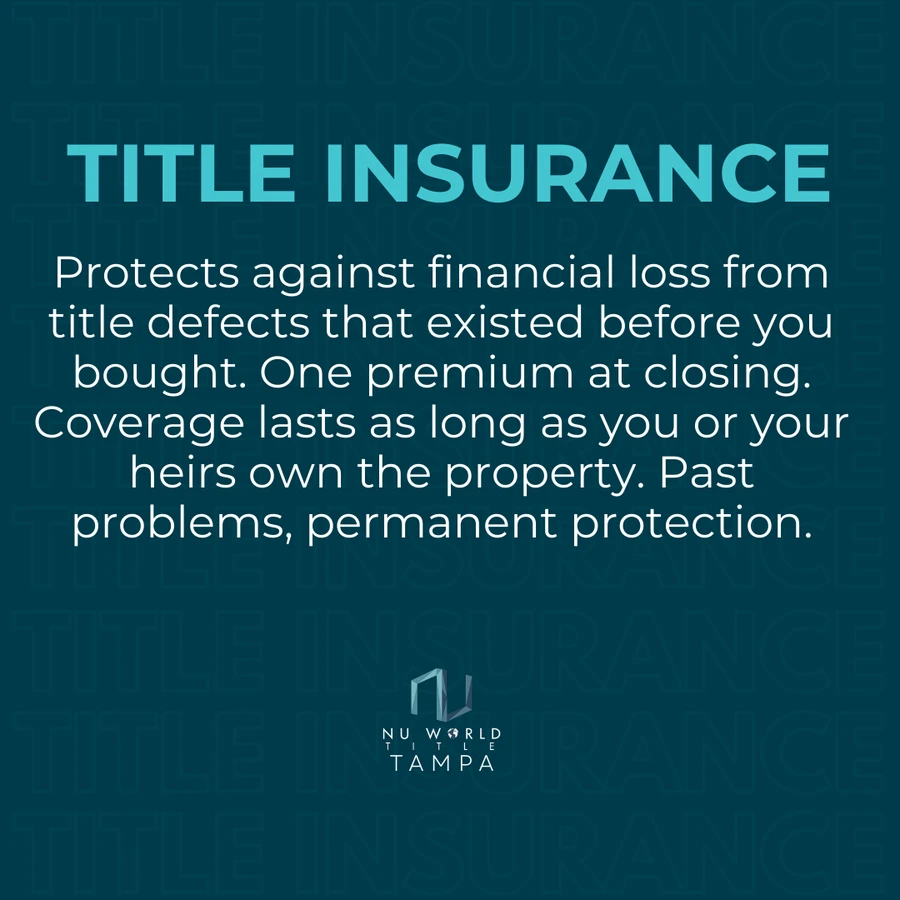
Title is your legal right to own the property. Title insurance protects against problems with that right that already exist when you buy but haven't surfaced yet: an old lien nobody cleared, a forged signature on a prior deed, an heir who never signed off, a recording error at the county, an unpaid contractor with a claim on the house. Unlike homeowners insurance, it covers the past instead of the future, and you pay for it once, at closing, rather than every year. The title agent searches the public records first, then the policy backs up what the search might have missed.
The Lender's Policy
If you're taking out a mortgage, your lender will require a loan policy. It insures the lender's interest in the property up to the loan amount, and that coverage shrinks as your balance shrinks. When you pay the loan off or refinance, the policy ends. Here's the part that surprises people: it does nothing for you. If a title defect knocks out your ownership, the lender recovers what it's owed and you recover nothing, because the policy was never yours. It's a cost of borrowing, the same way an appraisal is. You pay for it because the lender says so.
The Owner's Policy
The owner's policy insures you, for the full purchase price, for as long as you or your heirs own the home. It covers your down payment, your equity, and the legal fees to defend your title if someone challenges it. Nobody requires it. Skipping it saves a line item at closing and leaves everything you've put into the house unprotected against the one category of loss that homeowners insurance won't touch. For a buyer who plans to stay awhile, it's some of the cheapest peace of mind in the transaction. NU World Title Tampa's guide to owner's title insurance in Florida covers it from the title company's side of the table.
Why Florida Title Works Differently
Florida sets title insurance premiums at the state level, so the premium itself is the same no matter which title company you use. What varies is everything around it: search fees, closing fees, document preparation, courier charges, and the like. Shopping title companies in Florida means comparing those fees, not the premium. Florida also offers a simultaneous-issue discount when the owner's and lender's policies are bought together at the same closing, which makes the owner's policy cheaper than most buyers expect. Ask your title agent to quote both ways.
Who pays is the other Florida quirk. In much of the state, the seller customarily pays for the owner's policy and chooses the title agent. In several South Florida counties, the buyer traditionally pays and picks. It's all negotiable in the contract, and our guide to which closing costs Florida buyers can negotiate shows how title fits into the larger conversation.
Want a closing statement you can read without a translator?
We walk every buyer through title fees, lender fees, and prepaids before closing day. Start with a pre-approval and we'll take it from there.
What Happens Between Contract and Closing
Once you're under contract, the title agent orders a search of the public records and issues a title commitment, which is a promise to insure once certain conditions are met. Those conditions are where problems show up: an open permit, an unpaid HOA balance, a lien from a prior owner, a boundary issue. Some get cleared with a phone call; some take weeks. Florida title agents also run a municipal lien search for code violations and utility balances that don't appear in the county records, which is a step buyers in other states rarely see. All of this runs in parallel with your loan, and delays on either side push the closing. That's why we stay in contact with your title agent through the whole file. A lender who moves fast can't help you if title is stuck, and vice versa. Our post on conditional approval versus clear to close explains how the loan side reaches the finish line.
How the Money Flows
Title insurance premiums show up on your Closing Disclosure alongside the settlement fee and recording charges. If your contract says the seller pays for the owner's policy, that line lands on the seller's side of the statement. Your earnest money, which the title agent has been holding in escrow, gets credited against your total. If escrow is still a fuzzy concept, our explainer on how mortgage escrow works clears it up. The end result is a single wire from you covering the down payment, closing costs, and prepaids, with title insurance tucked inside it.
Questions Florida Buyers Ask
Is owner's title insurance required in Florida?
No. Only the lender's policy is required when you take out a mortgage. The owner's policy is optional, but it's the only one that protects your down payment and equity if a title problem surfaces after closing.
Who pays for title insurance in Florida?
It depends on the county and the contract. In much of Florida the seller customarily pays for the owner's policy and picks the title agent. In several South Florida counties the buyer usually pays. Either way, it's negotiable and should be spelled out in your purchase agreement.
Does the lender's title policy protect the buyer?
Not at all. It protects the lender's interest in the loan, and the coverage shrinks as you pay the balance down. If a title claim wipes out your ownership, the lender gets paid and you don't, unless you bought an owner's policy.
What is an owner's policy of title insurance?
It's a one-time policy, bought at closing, that protects your ownership against title problems that existed before you bought: old liens, forged deeds, missing heirs, recording errors. It covers you up to the purchase price and pays to defend your title if someone challenges it.
Do I need an owner's policy if I'm paying cash?
There's no lender's policy on a cash purchase, because there's no lender. That makes the owner's policy the only title protection in the deal, so skipping it leaves your entire purchase price exposed.
Title insurance is the one closing cost that keeps working after you've moved in, so it's worth understanding before you sign. If you want a lender who explains every line of your closing statement and gets you to the table on schedule, see how we close or give us a call.
Individual results may vary. Closing timelines depend on factors including appraisal, title, inspection, and borrower circumstances. 14 Days To Close does not guarantee a specific closing date.