
The house has a price tag. The loan, it turns out, has its own. Somewhere between your accepted offer and the closing table sits a stack of fees, and most Florida buyers treat that stack like the weather: unpleasant, unavoidable, nobody's fault.
Parts of it are exactly that. But a real slice of your closing costs is negotiable, and the buyers who save money at the table are the ones who learned which lines bend before they signed anything.
The Three Buckets on Your Loan Estimate
Every fee you'll pay lives on the Loan Estimate, the standardized form your lender sends after you apply. Learn to read it and the negotiation gets much easier, because the form itself sorts your costs into three very different buckets.
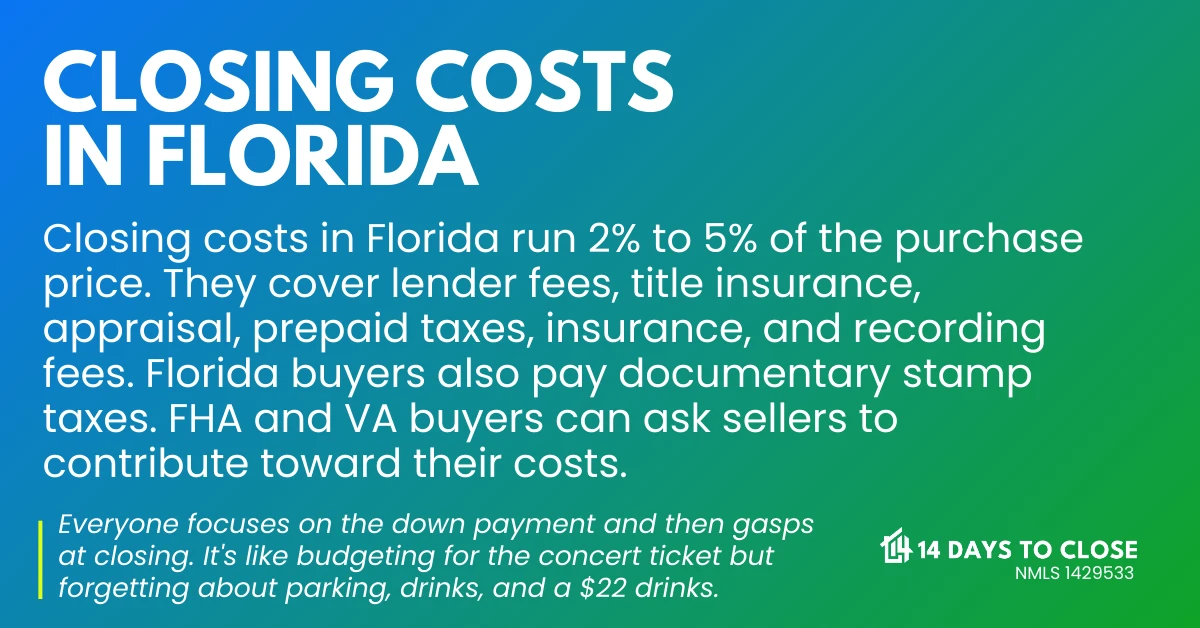
Bucket one is lender fees: origination, underwriting, processing, the money the lender charges for making the loan. Bucket two is third-party services: appraisal, title work, surveys, credit reports. Bucket three is prepaids and escrow: property taxes, homeowners insurance, and interest collected in advance. Our guide to reading a Loan Estimate walks the form line by line. For negotiating, remember one thing: each bucket plays by different rules.
Florida adds its own texture to all three. Title customs change by county, insurance premiums swing block by block near the coast, and documentary stamp taxes show up as a state-specific line that surprises out-of-state buyers. The form looks the same everywhere. The numbers on it are very much local.
The Fees That Bend
Start with the lender's own fees. Origination, processing, underwriting, application: these are set by the lender, which means the lender can change them. Ask directly. A competing Loan Estimate from another lender is the strongest leverage you'll ever hold, because it turns "can you do better" into "here's what better looks like."
Points and credits are the other dial. Paying mortgage points up front buys your rate down; taking lender credits raises the rate and lowers your cash to close. Neither is automatically right. A buyer keeping the house for decades does different math than one who might move in three years, and you're allowed to ask for both versions side by side.
Then there's the shoppable list. Some third-party services, title and settlement work chief among them, let you pick the provider. Quotes vary more than people expect, and a phone call comparing two title companies is one of the easier paydays in the whole process.
What about the appraisal? You can't pick the appraiser, and the fee mostly is what it is. Where you do have room is making sure you never pay twice: if a deal falls through and you restart quickly, ask what from your file, and your wallet, carries over to the next contract.
The Fees That Don't
Government charges won't move. Recording fees and Florida's documentary stamp taxes are set by statute, and no amount of charm at the closing table changes them. Doc stamps deserve a special callout for out-of-state buyers: they're a state transfer tax collected on deeds and notes, they scale with the size of the transaction, and they show up in every Florida deal. Budget for them and move on.
Escrow deserves a mention too. The account collects months of taxes and insurance up front, which stings at closing but was never a fee. That money stays yours, parked to pay bills that were always coming. Trimming it doesn't save you money, it moves your own bills to a later date.
Prepaids won't move either, at least not through negotiation. Property taxes are what they are, and prepaid interest depends on your closing date. Homeowners insurance sits in this bucket too, but with a twist: the escrow line isn't negotiable, while the policy behind it absolutely is. In Florida's insurance market, shopping your coverage can matter more than every lender fee combined.
Seller Concessions: The Biggest Lever
Here's where the real money moves. A seller concession is a credit the seller gives you at closing, applied straight against your closing costs. In a bidding war you may not get one. In a balanced or slow market, or on a house that's been sitting, it's a standard ask that plenty of buyers leave on the table out of politeness.
Two things to know. First, every loan program caps how much a seller can contribute, and the cap shifts with your loan type and down payment, so ask your loan officer for your number before you write the offer. Second, concessions pair well with other help: Florida down payment assistance programs can cover part of your cash to close, and a seller credit can cover much of the rest. Buyers convinced they need 20 percent down plus a mountain of fees are often carrying a smaller hill than they think.
One caution: a concession isn't free money, and a seller weighing two offers reads a big credit request as a lower net price. Work with your agent on what the house and the market will bear. The goal is a credit that closes the deal, not one that costs you the house.
Comparing two Loan Estimates?
Send us both. We'll show you which fees are padding and what a sharper offer looks like.
Timing Is the Whole Game
Negotiating power expires. Lender fees are easiest to challenge while lenders are still competing for your business, before you've committed and started the clock. Seller concessions get set when the offer is written, with one more window after the inspection if the house gives you a reason.
Between contract and closing, keep your file boring. New credit cards, financed furniture, and job changes can force re-disclosures and fresh underwriting conditions, which cost time, and in a rate-lock world, time is money you can't negotiate back.
By the week of closing, nearly everything is locked. The buyers who pay less at the table did their pushing a month earlier. So collect more than one Loan Estimate, read each one like a bill instead of a formality, and question every line you don't understand. If you'd like company for that read-through, give us a call and we'll walk through yours line by line.