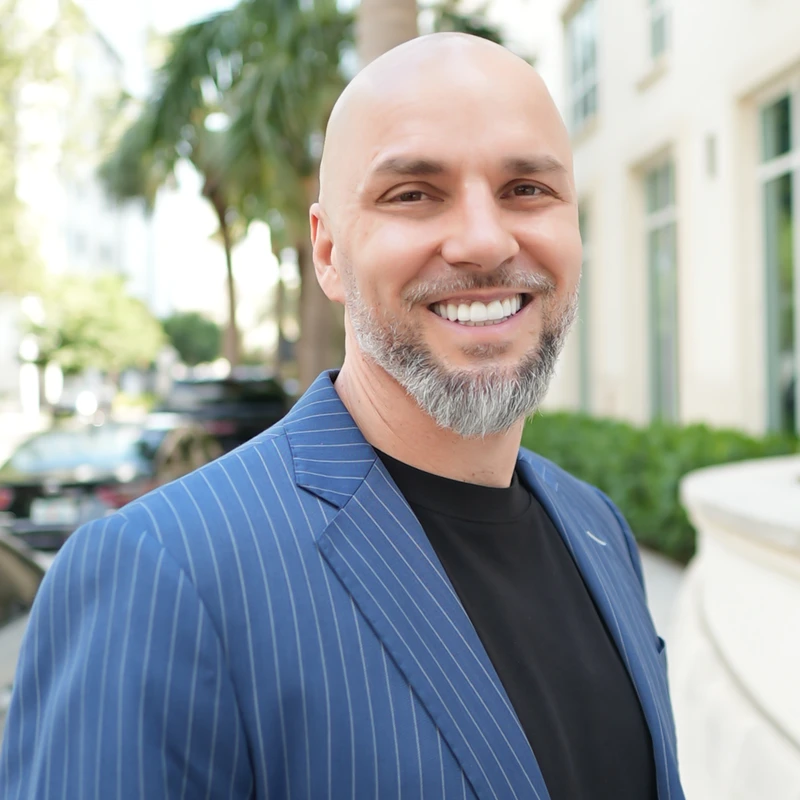
Jordan Vreeland
Licensed Mortgage Broker · NMLS #75243
3.5% down. Credit scores from 580. Gift funds allowed. FHA is one of the most accessible purchase loans in Florida, and 14 Days To Close has the process dialed in to move fast.
The Basics
FHA loans are mortgages insured by the Federal Housing Administration. Because the federal government backs the loan, lenders can accept borrowers who don't have perfect credit or a large down payment. That reduced lender risk is what opens the door for buyers who wouldn't qualify for conventional financing.
The core advantages are straightforward: 3.5% down for borrowers with a 580+ credit score, flexible debt-to-income guidelines, and the ability to use gift funds for the entire down payment. Sellers can contribute up to 6% of the purchase price toward your closing costs, which is higher than what's allowed on conventional loans.
FHA is for primary residences only. You can use it to buy a single-family home, a condo in an FHA-approved complex, or a 2-4 unit property as long as you live in one unit. The FHA 203(k) loan is a separate product that lets you finance the purchase and renovation costs in a single loan, worth knowing if you're looking at fixer-uppers.
For a first-time buyer or someone rebuilding credit, FHA often means the difference between buying now and waiting another two or three years. Read our full guide to FHA loans for first-time buyers for a deeper breakdown of why it works so well for early-stage buyers.
With 580+ credit score
With 500-579 credit score
Max. seller concessions
Flexibility available with strong file
2026 County Limits
HUD sets FHA loan limits by county each year based on local home prices. If a home's purchase price exceeds your county's limit, FHA financing isn't available for that property. Here are the 2026 single-family limits for Florida's major counties.
| County | Metro Area | 2026 FHA Limit (Single-Family) |
|---|---|---|
| Hillsborough County | Tampa | $563,500 |
| Pinellas County | St. Petersburg / Clearwater | $563,500 |
| Miami-Dade County | Miami | $621,000 |
| Broward County | Fort Lauderdale | $621,000 |
| Palm Beach County | West Palm Beach | $621,000 |
| Duval County | Jacksonville | $546,250 |
| Orange County | Orlando | $563,500 |
| Sarasota County | Sarasota / North Port | $524,225 |
| Monroe County | Florida Keys | $1,209,750 |
| All Other Counties | Statewide Floor | $524,225 |
Limits shown are for single-family properties. 2-4 unit FHA limits are higher. Source: HUD 2026 limits. See the full FHA loan limits breakdown by Florida county for detailed figures.
Mortgage Insurance
Every FHA loan comes with mortgage insurance. There are two parts: an upfront MIP of 1.75% of the loan amount (typically rolled into the loan balance rather than paid at closing), and an annual MIP paid monthly. For most standard 30-year FHA loans, the annual MIP runs about 0.55% of the loan amount, split into monthly payments.
On a $300,000 loan, that's roughly $137 per month added to your payment. It's not nothing, but it's also the cost of buying with a smaller down payment and more flexible credit requirements than conventional financing would allow.
How long you pay MIP depends entirely on your down payment. Put less than 10% down and MIP stays for the life of the loan, it doesn't cancel automatically when you hit 20% equity the way PMI does on a conventional loan. Put 10% or more down and MIP drops off after 11 years.
The most common path we see: use FHA to get into the home now, build equity over 2 to 3 years, then refinance into a conventional loan to eliminate the MIP. It's a planned two-step that works well in Florida's market. Read the full FHA MIP breakdown for the complete cost picture before you decide.
We'll run both scenarios side by side with real numbers. You'll see the full monthly payment difference, including MIP vs. PMI, before you commit to anything.
One thing most buyers don't account for: FHA MIP costs more over time than a slightly higher conventional rate in many scenarios. That's not a reason to avoid FHA, it's a reason to understand the math. We show you both paths so you're making an informed decision, not just picking the loan that sounds easier to qualify for.
Jordan's team maps out the refinance threshold upfront: what equity level and credit score will trigger the right time to switch, and what the monthly savings will look like when you do.
Qualifying
FHA is designed to be accessible, but there are specific thresholds and waiting periods worth understanding before you apply.
580 or above: qualify with 3.5% down. 500-579: qualify with 10% down. Below 500: FHA isn't available. Lenders may set their own minimums above these FHA floors.
FHA's standard DTI cap is 43%. In some cases, with a strong compensating factor, large cash reserves, excellent credit history, or minimal payment shock, lenders can approve higher DTI ratios.
Two years of stable employment history is the standard. Self-employed borrowers need 2 years of tax returns. Employment gaps are reviewable, they don't automatically disqualify you.
Savings, checking, investment accounts, gift funds from a family member or employer, and most Florida down payment assistance programs all count. The source just needs to be documented.
Chapter 7: 2-year wait after discharge. Chapter 13: possible after 1 year of on-time payments with court approval. Extenuating circumstances can sometimes shorten the window.
FHA requires an appraisal that confirms the home is safe, sound, and livable. Major health or safety issues need to be resolved before closing. The home must be your primary residence, no investment properties or vacation homes.
Our Process
Most lenders collect documents, wait for an accepted offer, and then start underwriting. That's why the industry average is 30 to 45 days for an FHA loan. Our process runs differently.
Before you make an offer, Jordan's team runs your file through DU, Fannie Mae's Desktop Underwriter, to surface any issues early. Credit gaps, DTI concerns, income documentation requirements: you find out upfront, not three days before closing when it's too late to fix anything.
We've closed loans in as few as 5 days. Most clients close well ahead of the industry average. When your file is clean and you've done the preparation work, the timeline compresses fast. FHA doesn't have to be slow. It just needs the right lender.
We're also available nights and weekends, because real estate decisions don't wait for business hours. Questions about your file at 9pm on a Sunday? You'll get a response. That kind of access is built into how we operate, not an exception.
Common Questions
The questions buyers ask most before applying, answered without the runaround.
Go Deeper
Everything we've published on FHA, in one place.
Upfront vs. annual, how long you pay it, and when it makes sense to refinance out. The full cost picture before you commit.
Every Florida county's 2026 FHA limit for single and multi-family properties, including limits that changed from 2025.
Tampa-specific FHA guide: Hillsborough County limits, DPA programs that stack with FHA, and what buyers in this market actually face.
Individual results may vary. Closing timelines depend on factors including appraisal, title, inspection, and borrower circumstances. 14 Days To Close does not guarantee a specific closing date.
Start the pre-approval process today. We'll run your numbers, check DPA eligibility, and show you exactly what your monthly payment looks like before you start shopping.