
You got the email. Congratulations, you're conditionally approved. It feels like a finish line, and it isn't one. It's the last mile marker before the finish line, and what you do over the next few days decides how fast you cross it. Here's what each term means, what sits between them, and how Florida buyers get from one to the other without losing a closing date.
Conditional Approval Is a Yes, With Homework
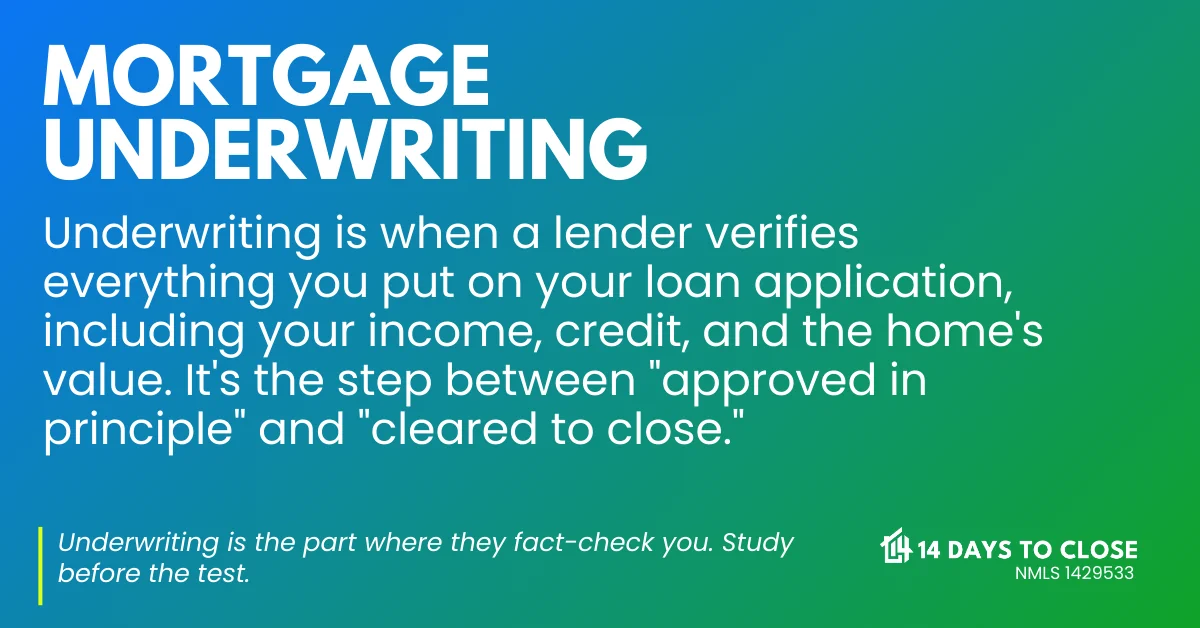
Conditional approval means an underwriter, the person at the lender who verifies your entire financial file, has reviewed your application and likes what they see. Income checks out. Credit checks out. The loan works. They're prepared to approve it, on the condition that you hand over a short list of remaining items. That's a much stronger position than a pre-qualification or even a pre-approval, because a real underwriter has now touched your file. If you're curious what happens inside that review, we walked through it in how long mortgage underwriting takes.
The word doing the heavy lifting is conditional. The lender isn't asking whether to approve you. They're telling you what stands between you and done.
What the Conditions Usually Look Like
Conditions sound scarier than they are. Most are routine paperwork: an updated pay stub or bank statement, a letter of explanation for a deposit (a short note saying where money came from), proof your homeowner's insurance is bound, the appraisal report, title work, or a gift letter if a family member is helping with the down payment. None of it means the underwriter doubts you. It means the file has to prove on paper what you told them out loud.
There's a second category worth knowing: conditions that depend on other people, like the appraisal or the title search. You can't speed those up directly, but your loan officer can order them early, which is one reason lender choice shows up in your timeline.
Clear to Close Is the Real Finish Line
Clear to close means the underwriter has reviewed every condition, checked every box, and signed off on the whole file. There's nothing left to verify. The lender starts preparing final closing documents, and the title company schedules your signing. One federal rule shapes the last stretch: you must receive your Closing Disclosure, the final statement of your loan terms and costs, at least three business days before you sign. That waiting period exists so you can read the numbers without a pen in your hand.
How Long From Conditional to Clear?
Mostly, that's up to you. The industry average purchase loan runs 30 to 45 days from application to closing, and the conditional-approval stage is where a big chunk of that time hides. Every day a condition sits in your inbox is a day added to the calendar. Buyers who send documents back the same afternoon can clear conditions in days. Buyers who wait for the weekend stretch it into weeks. Our process is built around a 14-day closing timeline, and yes, it can be done when the file is clean and the buyer moves fast.
Want an underwriter on your file from day one?
The fastest closings start with a complete application. Start yours now and we'll tell you exactly what to gather before conditions ever appear.
Don't Blow Up Your Own Approval
Here's the part nobody warns buyers about: conditional approval can be revoked. Lenders re-verify credit and employment right before clear to close, so the window between the two is exactly the wrong time to finance a truck, open a store card for the new house, change jobs, or shuffle large amounts between accounts. Any of those can send your file back into underwriting, and some of them can sink it. We've seen it happen a week before closing, which is why we wrote a whole post on avoiding a last-minute mortgage denial.
How to Get to Clear Faster
Three habits separate fast files from slow ones. Answer document requests the same day, even if the answer is a question. Send complete documents, all pages, not phone screenshots of page one. And tell your loan officer about anything unusual in your finances before the underwriter finds it, because surprises found late are the most common cause of closing delays.
If your current lender has been sitting on conditional for weeks and can't tell you why, that's a lender problem, and it's fixable. We've closed loans in as few as 5 days from a clean file. See how fast we move or give us a call and we'll give you a straight answer on your file.
Individual results may vary. Closing timelines depend on factors including appraisal, title, inspection, and borrower circumstances. 14 Days To Close does not guarantee a specific closing date.