
Your offer got accepted. Great. Now someone wants a few thousand dollars wired to a title company within three days, and nobody explained why. That's earnest money, and in Florida it comes with real deadlines that decide whether the deposit comes back to you or stays with the seller. Here's how it works.
What Earnest Money Is
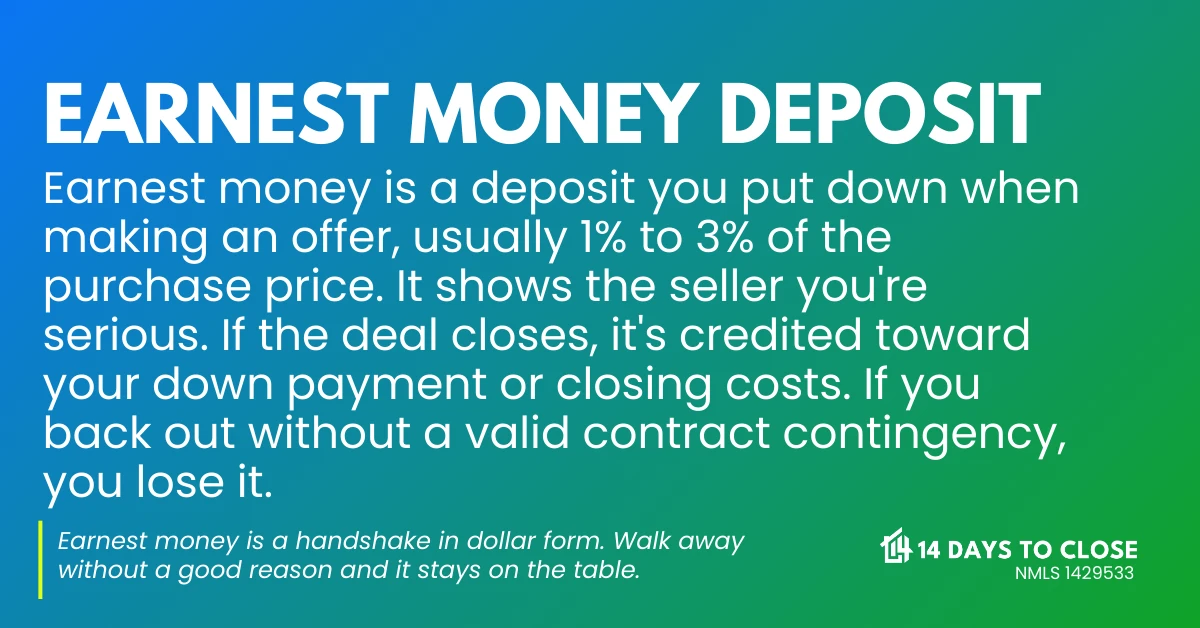
Earnest money is a good-faith deposit you put up when a seller accepts your offer. It tells them you're serious enough to have skin in the game while the deal moves toward closing. The money doesn't go to the seller. It sits in escrow, a neutral holding account managed by a title company, real estate brokerage, or closing attorney, until the deal closes or falls apart. If escrow is a fuzzy concept, our guide to how mortgage escrow works covers it. One rule to tattoo on your brain: never hand a deposit directly to a seller.
How Much Florida Buyers Put Down
Earnest money in Florida typically runs 1% to 3% of the purchase price. On a $400,000 home, that's $4,000 to $12,000. Hotter listings and multiple-offer situations push toward the high end, because a bigger deposit signals a buyer who won't flake. Slower markets and long-sitting listings give you room to offer less.
The deposit isn't extra money on top of everything else, and we'll get to where it ends up in a minute. But you do need it liquid and ready before you write offers. If you're still building the war chest, here's how much you should have saved before applying.
When the Deposit Is Due
Most Florida deals run on the FAR/BAR contract, the standard form created by Florida Realtors and The Florida Bar. Under it, your initial deposit is typically due within 3 days of the effective date, which is the day the last person signed. That's a short window. Have the funds sitting in an accessible account before you make offers, and confirm exactly where the money is supposed to go.
When You Get It Back
The deposit is refundable when you cancel inside a contingency window, a contract clause that gives you a legal exit. The big ones: the inspection period, often around 15 days, during which you can walk for any reason at all. The financing contingency, commonly around 30 days, which protects you if your loan is denied and you can document it. And title issues the seller can't fix after you object in writing. Cancel properly inside a window, with written notice, and the escrow holder releases your money back to you.
Notice what does the protecting there: deadlines. Every one of those windows closes on a specific day, which is why the buyers who read the contract before writing an offer keep their deposits and the ones who wing it don't.
When You Lose It
You forfeit earnest money when you default outside your contingencies. The classic version: waiving the inspection period to look competitive, then trying to walk over something an inspection would have caught. The quieter version: letting a financing deadline pass while your loan is still stuck in underwriting, then needing to cancel a week later. Miss the window and the seller has a claim on your deposit, even if your reason for walking was sensible.
Your financing contingency has a deadline. Your lender should respect it.
A pre-qualification tells you what you can offer before earnest money is ever on the line. It takes minutes and costs nothing.
Where the Money Goes at Closing
If the deal closes, you don't get the deposit back, and that's fine, because it was never spent. It gets credited against your cash to close, reducing what you owe for the down payment and closing costs. Think of it as paying the first slice of your closing bill early.
One last connection worth making: the biggest earnest money risk in this whole process is a slow lender burning through your financing contingency. That risk is a choice. We've closed loans in as few as 5 days when the file was clean, while the industry average runs 30 to 45 days. See how fast we move or give us a call before you write your next offer.
Individual results may vary. Closing timelines depend on factors including appraisal, title, inspection, and borrower circumstances. 14 Days To Close does not guarantee a specific closing date.