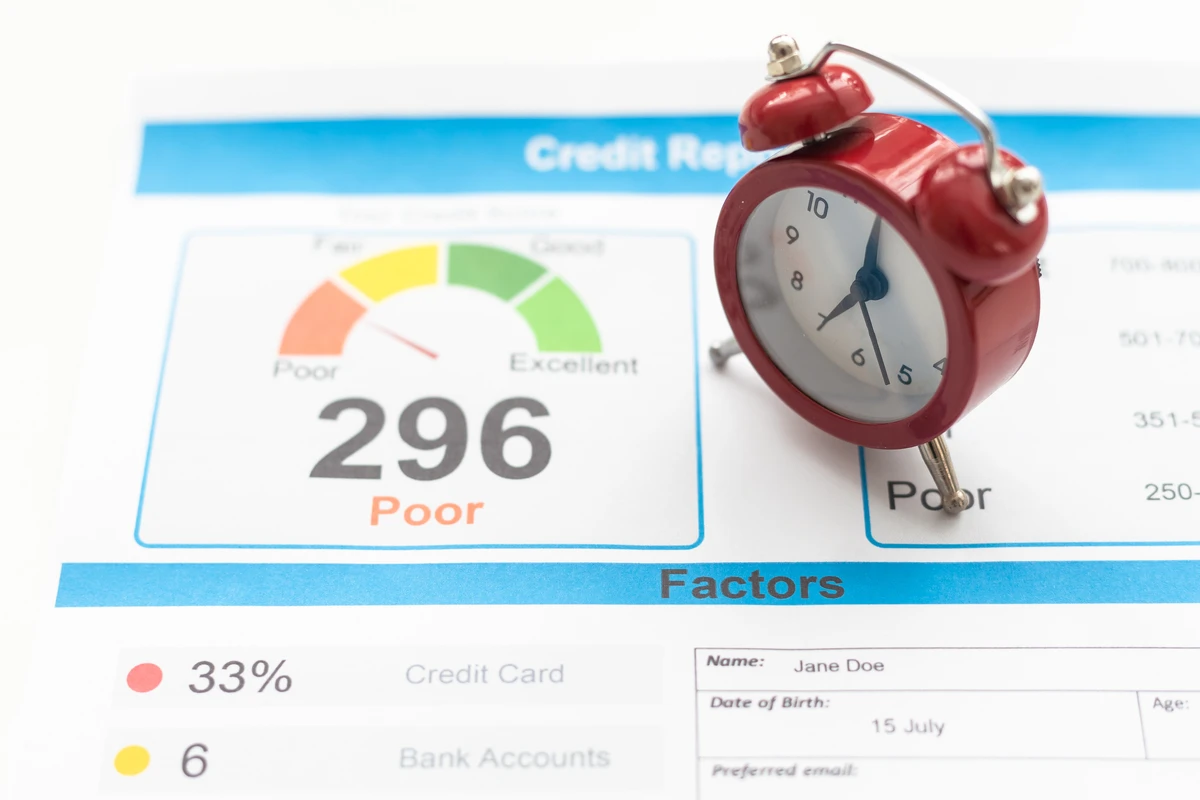
Here's a scenario we see more often than you'd think. A buyer is two weeks from closing on a Florida home. Then the loan officer calls: the credit report shows a card balance that was paid off a month ago, or a collection that belongs to somebody else, and the score sitting in the file is a dozen points lower than it should be. A dozen points that change the pricing, or in a tight file, the approval.
Waiting for the credit bureaus to catch up on their own schedule takes weeks you don't have. That's the problem a rapid rescore exists to solve.
Why Credit Timing Trips Up Florida Buyers
Credit bureaus don't update your file in real time. Creditors report on their own cycles, and a payment you make today typically takes 30 to 60 days to show up on the report a lender pulls. In normal life, nobody notices the lag. In the middle of a mortgage, it's the gap between the rate you were quoted and the rate you get.
Mortgage pricing works in brackets. Land one point below a bracket line and you can pay for it every month for 30 years, on the same house, with the same income. That's why a stale balance or a reporting error isn't a paperwork annoyance. It's money. Our breakdown of credit score requirements by loan type shows where those lines sit.
What a Rapid Rescore Is
A rapid rescore is a formal process where your lender submits proof of a change directly to the credit bureaus and asks them to update your file now instead of on the usual cycle. With the documentation in hand, the update usually posts within two to five business days. A standard dispute you file yourself can take up to 30 days, and simply waiting for the next reporting cycle can take longer than your entire escrow period.
Two things separate it from anything you can do on your own. First, only a lender can request one. There's no consumer version, and a company selling you a "rapid rescore" directly is selling you something else. Second, the lender pays the bureau fees and isn't allowed to bill you for them directly.
What It Can Fix, and What It Can't
A rapid rescore updates facts. It works when you have written proof of something your report hasn't caught up with:
- A card balance you've paid down or paid off, with a statement or payoff letter showing it
- An account that isn't yours, with the creditor's written confirmation of the error
- A collection that was paid or settled, with a letter from the collector saying so
- An account wrongly reported late, with the creditor's correction in writing
What it can't do: erase accurate negatives, invent history you don't have, or argue an on-time record into existence. If the late payment happened, a rescore won't unhappen it. For real negatives, the fix is time and strategy, not speed.
How the Process Works, Step by Step
Start with your loan officer, not the bureaus. Together you look at the credit report in the file and pick the targets: the stale balance, the wrong account, the paid collection still showing open. Not every item is worth chasing, so a good loan officer runs a score simulation first and tells you which fixes move the number.
Then you create the paper trail. Make the payment or request the correction, and get the proof in writing: a current statement, a payoff letter, or a letter from the creditor on its letterhead confirming the change. Screenshots of your banking app don't count. The bureaus act on creditor documents, and the quality of that letter decides whether the rescore flies through or bounces.
From there it's out of your hands in the best way. Your lender submits the documentation to the bureaus, the file updates within those two to five business days, and the lender reruns your score and reprices the loan. You'll know whether it worked before your closing date, which is the entire point.
How Many Points Do You Need?
That depends on where you're starting and which loan you're after. Each program has its own minimum, and lenders price conventional loans in score brackets on top of those floors. The play is to find the gap between where your score sits today and the next line up, then work out whether a paydown or a correction closes it.
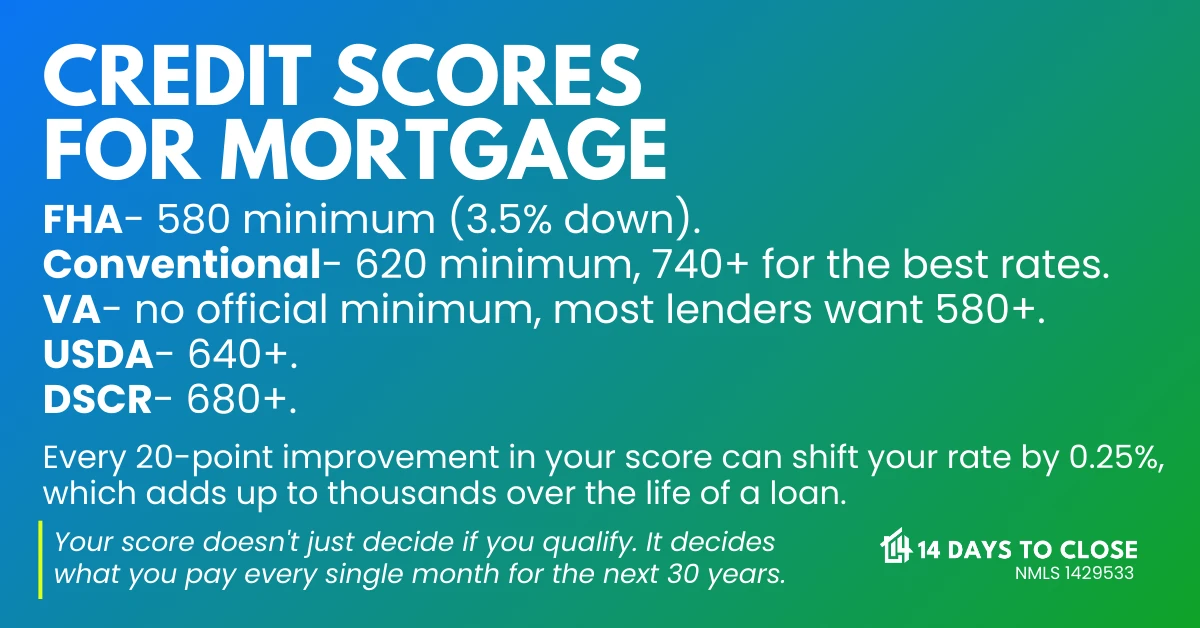
If you're starting at 600 or below, a rescore alone probably isn't the whole plan. Our guide to buying a home with a 600 credit score covers which programs stay open to you and what moves the needle from there.
Not sure if your score is costing you money?
Send us the scenario. We'll tell you if a paydown plus a rescore changes your pricing, and by how much, before you're under contract.
The Timing Math Before a Closing
Work backward from your closing date. The creditor has to confirm the change in writing first, which can take a few days or a couple of weeks depending on who you're dealing with. Then the bureaus need their two to five business days. Then your lender reruns the score and updates the file. A rescore is comfortable with two or more weeks of runway. Inside one week, it gets tight.
So the move is to pull your report early, ideally before you're under contract, and deal with surprises while they're cheap. It also helps to know when credit gets checked during the homebuying process, because many lenders re-verify shortly before closing. New balances or new accounts in that window can undo everything the rescore just fixed. Our post on avoiding a last-minute mortgage denial covers the other landmines.
If Your Lender Shrugs
Not every lender bothers with rescores. They're real work: chasing creditor letters, submitting to three separate bureaus, rerunning the file, repricing the loan. Some shops would rather let your closing date slide than move fast on a fixable error, and some loan officers have never actually run one.
That's a lender problem, not a fact of life. We've closed deals in as little as 4 days from first inquiry to clear to close. If your closing is at risk over a credit issue that paperwork can fix, see how fast we move or give us a call before you accept a delay.
Individual results may vary. Closing timelines depend on factors including appraisal, title, inspection, and borrower circumstances. 14 Days To Close does not guarantee a specific closing date.