
A foreclosure is a serious financial event, but it doesn't permanently disqualify you from homeownership. Each major loan program has a defined waiting period after foreclosure, and what you do during that time, rebuilding credit, maintaining clean payment history, and saving for a down payment, determines how strong your application will be when you're eligible to apply.
Waiting Periods by Loan Type
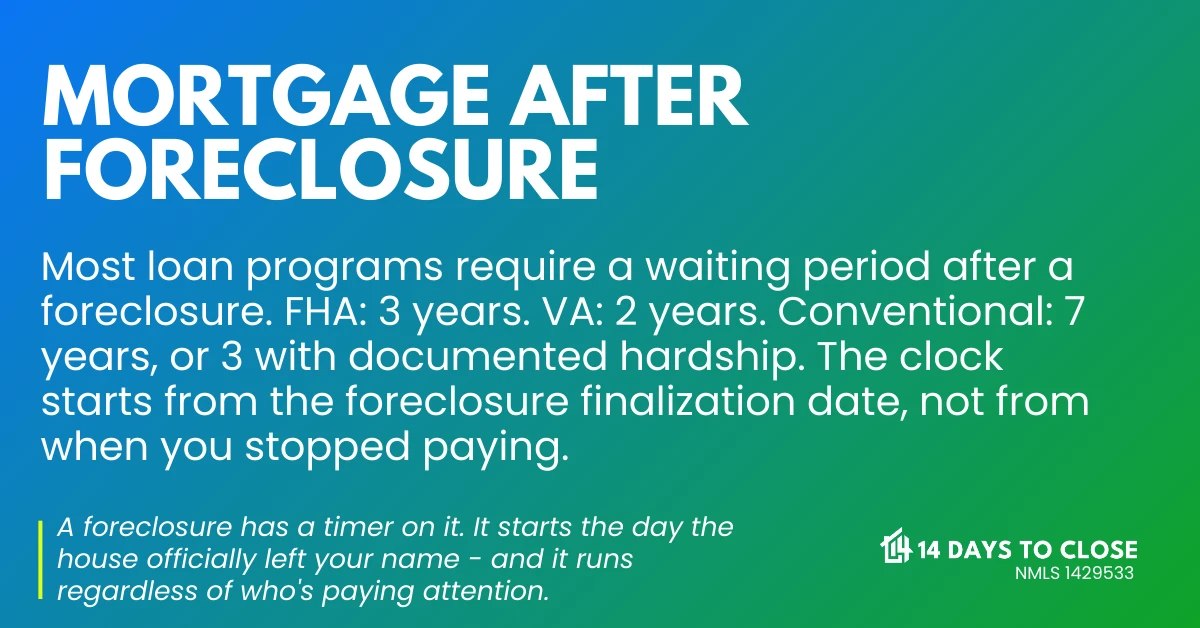
Conventional loans (Fannie Mae and Freddie Mac) require a 7-year waiting period after a foreclosure. This is the longest waiting period across loan programs. The clock starts from the foreclosure completion date, when the property transferred title, not when you stopped making payments.
FHA loans have a 3-year waiting period after foreclosure under standard guidelines. Extenuating circumstances, documented job loss, death of a primary wage earner, serious illness, can reduce this to 1 year in some cases, but the documentation burden is high. VA loans have a 2-year waiting period for veterans with full entitlement who are otherwise eligible. The VA's approach is more flexible than conventional programs, particularly for veterans who experienced foreclosure due to service-related financial hardship. USDA loans have a 3-year waiting period, similar to FHA.
Florida's Judicial Foreclosure Process Affects the Clock
Florida is a judicial foreclosure state, foreclosures go through the court system. The timeline is longer than in non-judicial states, often 12 to 24 months or longer if contested. The foreclosure is complete when the court issues the final judgment and the property transfers at auction.
The waiting period clock starts at that completion date, not at the date you received the notice of default or stopped making payments. For Florida homeowners who went through the process during the 2008–2012 crisis and had extended timelines due to court backlogs, the completion date may be later than expected. Check your records carefully before assuming where you are in the waiting period.
Rebuilding During the Waiting Period
The waiting period isn't dead time. What you do during it determines whether you qualify at the earliest possible opportunity or have to wait longer due to a weak credit profile.
Priority one: establish positive credit history. Open a secured credit card within the first six months if you have none. Pay every bill on time, every month. Add a second credit line after 12 months. By the time your waiting period expires, aim for a 640 to 660 credit score minimum for FHA and 700 or above for conventional. For context on what credit score requirements look like for conventional loans, knowing the target gives you something to aim at during the recovery period.
Priority two: save for down payment and reserves. FHA requires 3.5 percent down with a 580 score. Having six months of reserves strengthens your file when your score is near the minimum. Conventional at year seven requires 10 to 20 percent down for the best terms.
Approaching the end of your waiting period?
We'll review your credit file and tell you exactly where you stand before you apply, no guesswork, no wasted hard pulls.
Extenuating Circumstances Exceptions
If the foreclosure resulted from an event beyond your control, a layoff, a documented medical crisis, death of a co-borrower, loan programs have provisions for reducing waiting periods. FHA's extenuating circumstances provisions can reduce the FHA wait from three years to one year with proper documentation showing a clear causal connection between the event and the foreclosure, plus evidence the circumstance has been resolved.
VA lenders have discretion in applying extenuating circumstances as well. The documentation must connect the event directly to the foreclosure. A general statement that "things were hard financially" doesn't qualify. The circumstances need to be verifiable and clearly linked.
Deed in Lieu and Short Sale Waiting Periods
A deed in lieu of foreclosure, voluntarily transferring the property to the lender, has shorter waiting periods than a formal foreclosure: 4 years for conventional, 3 years for FHA, 2 years for VA. A short sale, where you sell for less than the mortgage balance with lender approval, is treated similarly.
If you're currently in financial distress and foreclosure is a risk, exploring a deed in lieu or short sale, if your lender agrees, can shorten the path back to homeownership. It's worth understanding how buyers with damaged credit approach the mortgage process regardless of which route got them there.
At 14 Days To Close, we work with borrowers at every stage of credit recovery. If you're approaching the end of your waiting period, we'll review your file and tell you exactly where you stand before you apply.