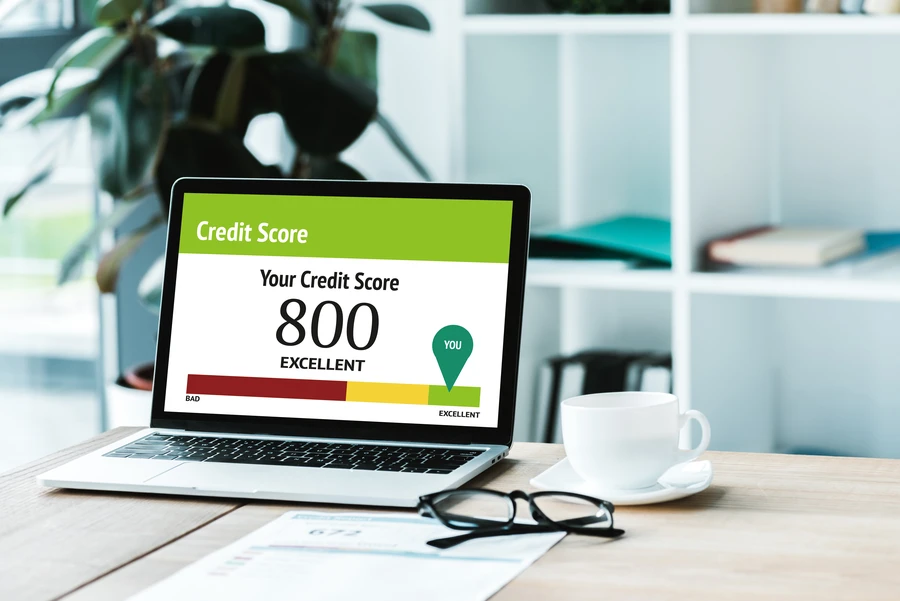
The number you'll see most often is 620. That's the minimum credit score most lenders require to qualify for a conventional loan. But here's what that number doesn't tell you: a 620 and a 740 get you completely different mortgages. Different interest rates, different monthly payments, and in some cases different loan amounts. The minimum score gets you in the door. Your actual score determines what the loan costs you.
The Minimum Score Is Just the Starting Line
Conventional loans backed by Fannie Mae and Freddie Mac require a minimum credit score of 620 for most programs. Below that, you're typically looking at FHA loans, which have more flexibility on credit but come with mandatory mortgage insurance. If you're weighing options, our breakdown of how long you pay PMI on an FHA loan is worth reading before you decide.
At 620, you can get a conventional loan, but you'll pay a higher rate than someone with a 700 or 740. Lenders use a pricing model called Loan Level Price Adjustments (LLPAs) that applies a surcharge to your rate based on your score and down payment combination. A borrower with a 620 score and 5% down pays more at closing and every month than a borrower with a 740 score and the same down payment.
How Much Does Your Score Actually Affect Your Rate?
On a $350,000 conventional loan with 5% down in Florida, the interest rate difference between a 620 score and a 760 score can be 0.75% to 1.25%, depending on the lender and current market conditions. That translates to roughly $150 to $250 more per month for the borrower with the lower score. Over five years, that's $9,000 to $15,000 in additional interest.
The jump from 620 to 680 tends to be meaningful. The jump from 680 to 740 is also meaningful, though smaller. Once you're above 740, most lenders don't price you better just because you hit 780. The scoring tiers matter more than raw score optimization above a certain threshold.
What If Your Score Isn't Where You Need It?
A few things move a credit score faster than most buyers expect. Paying down revolving balances below 30% of the limit is the single highest-impact action for most people. Disputing inaccurate items, keeping older accounts open, and avoiding new inquiries in the 90 days before applying also help. A 20-point improvement can move you from one pricing tier to the next, which is worth real money over the life of the loan.
If your score is in the 600s and you're trying to understand what's possible right now, our guide to getting a mortgage with a 600 credit score covers the FHA and conventional options side by side, including where the real cost differences show up.
What Score Gets You the Best Conventional Loan in Florida?
For most buyers using a conventional loan in Florida, a 740 or above is the practical threshold for the best pricing available. You don't need to optimize past that. A 700 to 739 range is solid and gets you competitive rates, though with slightly higher LLPAs depending on down payment. Below 680, the rate adjustments start adding up in a way that makes FHA worth a serious comparison.
At 14 Days To Close, we look at your full profile, not just your score, to find the loan structure that fits your situation. Sometimes FHA beats conventional even with a good score, depending on your down payment and how long you plan to hold the loan. When you're ready to see the full picture, schedule a callback and we'll walk through every option side by side.