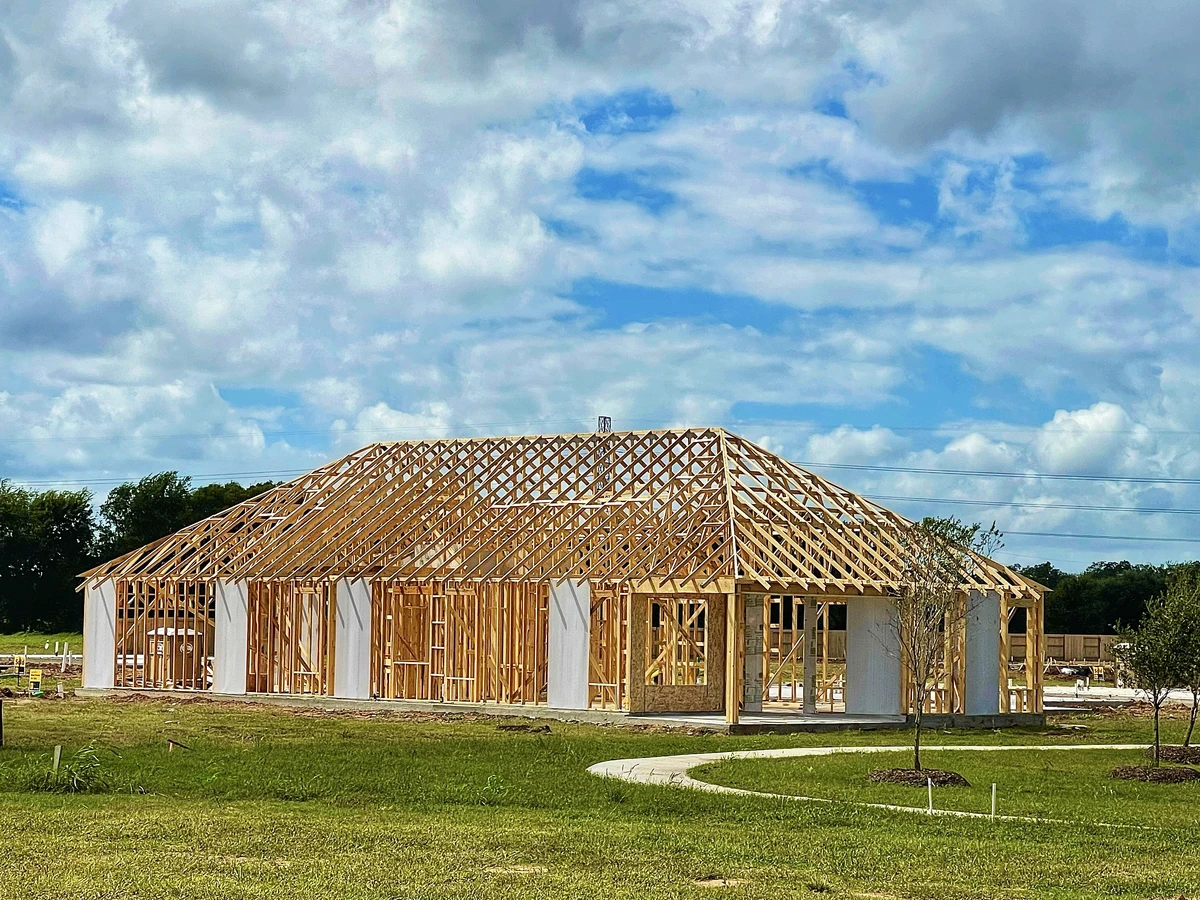
Most Florida buyers know how a mortgage works when the house already exists. Ask how you finance a house that doesn't exist yet, and the answers get fuzzy fast. Lenders can't exactly take a half-poured foundation as collateral the way they take a finished home.
The construction-to-permanent loan, sometimes called a one-time close, is how most people solve this. One loan pays the builder while the home goes up, then turns into your regular mortgage when it's done. Here's how it works and where people get tripped up.
Two Loans or One: The Fork in the Road
The traditional route uses two separate loans. First, a standalone construction loan, a short-term note that funds the build, usually over about a year. Then, when the home is finished, you apply for a permanent mortgage that pays off the construction loan. Two applications, two approvals, two closings, two sets of closing costs.
The two-loan route has a quieter risk baked in: you have to qualify all over again at the end. If rates climb mid-build, or your income situation changes, or your credit takes a hit while the drywall is going up, the permanent loan you were counting on can look very different by the time you need it.
A construction-to-permanent loan collapses all of that into one transaction. You apply once, close once before ground breaks, and the loan converts to your permanent mortgage at completion. No second closing, no second set of costs, no requalifying with your fingers crossed.
How the Construction Phase Works
Your lender doesn't hand the builder the full amount on day one. The money goes out in draws, staged payments tied to milestones: foundation, framing, dry-in, mechanicals, finishes. Before each draw, an inspector confirms the work is done. It's a discipline that protects you as much as the lender, because the builder gets paid for progress, not promises.
During the build, you typically make interest-only payments, and only on the amount drawn so far, not the full loan. Your early payments are small and grow as the house does. Once the home gets its certificate of occupancy, the loan converts to the permanent phase and your regular principal-and-interest payments begin, on terms that were set back at the original closing.
Budget honestly for change orders. The upgraded countertops and the extra outlets get decided mid-build, and they're paid outside the loan unless you planned for them. Many lenders want to see a contingency cushion in the budget for exactly this reason, and the buyers who skip it are the ones writing personal checks in month seven.
Which Loan Programs Offer a One-Time Close
This isn't a single product. It's a structure that several loan programs support, each with its own entry point.
FHA offers a one-time close construction loan with the same 3.5% minimum down payment its purchase loans are known for. VA-eligible veterans can build with no down payment at all, one of the least-advertised uses of the benefit. Conventional single-close programs exist too, with down payment requirements that vary by lender, and larger custom builds can pair the structure with jumbo financing.
The catch is that construction lending is specialized, and not every lender offers every flavor. Most files at 14 Days To Close run in-house through PRMG's full product menu, and we hold broker authority (NMLS #75243) for the rare file that fits better elsewhere. That matters more in construction than almost anywhere else, because program fit gets decided before the first draw, not after.
Your Builder Is Part of the Loan File
On a construction-to-permanent loan, the lender underwrites your builder almost as carefully as it underwrites you. Expect the lender to verify licensing and insurance, review the construction contract, and appraise the home based on plans and specs, valued as if it were already complete.
Many Florida builders will also push you toward their in-house lender, usually with incentives attached. Sometimes that's a fine deal. Sometimes the incentives paper over pricing you'd never accept from anyone else. The video above walks through the comparison, and our post on builder loans vs bank loans goes deeper on what to check before you sign.
Planning a build and not sure which loan fits?
FHA, VA, conventional, jumbo: the right structure depends on your land, your builder, and your budget. We'll map it with you before you commit to anything.
What to Have Ready Before You Apply
A construction-to-permanent file is heavier up front than a purchase file, because the lender is underwriting a promise instead of a house. Expect to bring a signed construction contract with a fixed price or a clearly defined cost structure, full plans and specifications, a line-item budget, and a realistic build timeline. The lender adds the builder's licensing and insurance to the file, then orders an appraisal on the completed home, valued from those plans as if it were already standing.
The buyers who sail through are the ones whose builder has done this dance before. A builder who can produce clean documents in a week keeps your file moving. One who treats the paperwork as an insult will slow every draw that follows, which tells you something useful before you're committed.
What About the Land?
Three situations, three answers. If you already own the lot, your equity in it can often count toward the down payment, which is how some Florida builds close with surprisingly little new cash. If you're buying the lot and building right away, the land purchase can usually roll into the construction-to-permanent loan itself. And if you're buying land now to build on years from now, that's a different tool entirely: a land loan first, construction financing later.
Florida Details Worth Knowing
A house under construction isn't insured like a finished home. Your builder carries builder's risk coverage during the project, and your own homeowner's policy takes over at completion, so line up that quote before the certificate of occupancy, not after. While you're at it, ask your builder about wind mitigation features. Building them in from the start is cheaper than retrofitting, and they can earn real discounts on Florida insurance premiums for as long as you own the home.
One more path worth naming: if what you want is a specific house made right rather than a brand-new one, buying an existing Florida home and renovating it with an FHA 203k renovation loan can get you there with a smaller budget than new construction.
Building a home is a long game, and the financing decisions you make before ground breaks follow you for decades. If you're weighing a build anywhere in Florida, give us a call and we'll walk the whole structure with you, draws to conversion.