Florida doesn't do fall like the rest of the country. Nobody's raking leaves. What we get instead is the market waking back up: snowbirds returning, relocators arriving after the school-year shuffle, and sellers who sat out the summer heat finally listing. If you're planning to buy this fall, the rate conversation needs to happen before all that, not during it.
What a Rate Lock Does
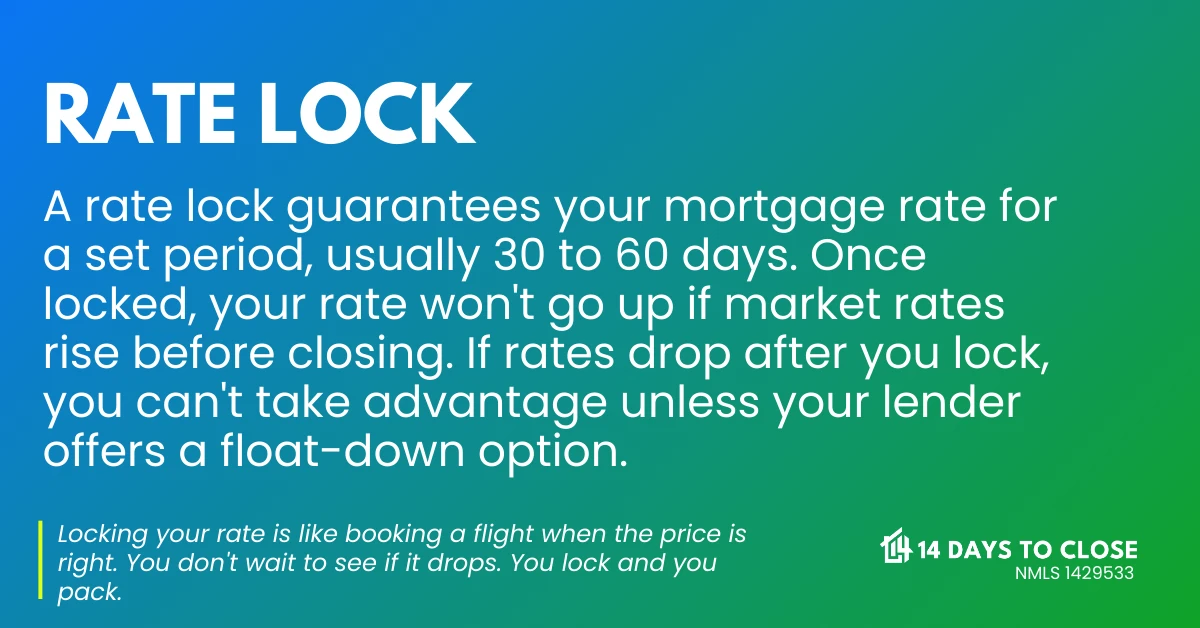
A rate lock is your lender's commitment to hold a specific interest rate for a set window while your loan gets to the closing table. Rates move every day, sometimes several times a day. The lock means the number on your Loan Estimate is the number you close with, as long as you close inside the window and nothing about the loan changes. If you want the full mechanics, our guide to how rate locks work and when to lock goes deeper. The short version: a lock protects you if rates rise. It doesn't help you if they fall, unless you've arranged for that separately.
Why Fall Timing Matters in Florida
Fall stacks a few things on top of each other here. Demand returns as out-of-state buyers show up, so listings that sat quiet in August start drawing multiple offers. Hurricane season is still officially running, which means an insurance binder or appraisal can get delayed if a storm enters the Gulf. And the holidays sit right at the end of the runway, when title offices and county recording desks slow down. Every one of those can push a closing date, and every pushed closing date tests your lock. Our comparison of fall versus summer buying in Florida covers the seasonal side. The lock side is simpler: pick a window that survives the delays fall is known for.
How Long to Lock
Lock periods come in a range of lengths, and the longer you hold the rate, the more it costs in pricing. That's the tradeoff most buyers never hear about. A long lock feels safe, but you're paying for insurance against a delay that a good lender shouldn't cause. A short lock is cheaper, but only if you're confident the loan closes before it runs out. The way to win that tradeoff is to work with a lender whose process is built for speed, so you can take the shorter lock without sweating the calendar. That's the whole reason our closing timeline matters beyond bragging rights. It changes what your lock costs.
Float-Downs and Falling Rates
A float-down is an add-on that lets you grab a lower rate if the market drops after you've locked. Not every lender offers it, and the ones that do usually charge for it or set a threshold the rate has to fall past before it kicks in. If you think rates might soften while you're under contract, ask about a float-down before you lock, not after. Once you're locked without one, your rate is your rate. If you want to understand what pushes rates around in the first place, our post on what determines your mortgage rate is the place to start.
Get a quote and a lock plan in the same conversation.
We'll show you where pricing sits today and how long a lock you'd need with our closing timeline. No pressure, no guesswork.
When Locking Is the Wrong Move
Locking too early is the classic mistake. Most lenders need a signed contract and a property address before they'll lock at all, so a "lock" you were promised while still house hunting may be a quote, not a commitment. Locking for far longer than your contract requires is the other one. You're paying for time you won't use. And if your insurance quote hasn't come back yet, hold off on finalizing anything, because a surprise premium can change your qualifying numbers. Given what's happening with Florida's home insurance market, get that quote early and let the lock follow it.
A Simple Fall Lock Strategy
Get pre-approved before you shop, so your file is clean and your closing can move the moment you're under contract. Get an insurance quote the same week your offer is accepted. Then lock for a window that matches your actual closing date, with a small cushion for storm season, and pick a lender who treats that date as a promise instead of a suggestion. Do those in order and the rate you're quoted this fall is the rate you'll be paying next spring.
Questions Florida Buyers Ask
Can you lock a mortgage rate before you find a house in Florida?
Usually not. Most lenders need a property address and a signed contract before they'll lock, because the lock is tied to a specific loan on a specific home. Some offer a lock-and-shop program that holds a rate while you search. Ask before you assume you have one.
What happens if my rate lock expires before closing in Florida?
You either pay an extension fee to keep the rate or you take whatever rate the market is offering that day. Neither is fun. The fix is picking a lock period that matches a realistic closing date and a lender who can hit it.
Does locking a mortgage rate cost money?
A standard lock is typically built into your pricing rather than charged as a separate fee. Longer locks, extensions, and float-down options are where costs show up. Your loan officer should walk you through the tradeoffs before you commit.
If you're buying this fall, the smartest lock is the one that ends the day you get your keys. A lender who closes fast lets you take a shorter, cheaper lock and still sleep at night. See how fast we move, or give us a call and we'll map out a lock strategy for your timeline.
Individual results may vary. Closing timelines depend on factors including appraisal, title, inspection, and borrower circumstances. 14 Days To Close does not guarantee a specific closing date.