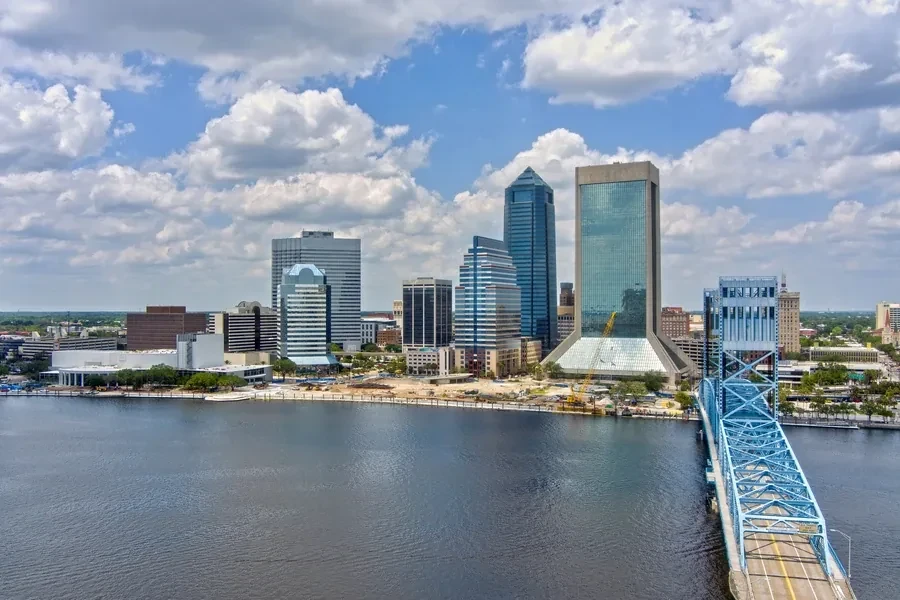
Jacksonville is the rare American city where "what's the market doing" is close to an unanswerable question. The city limits sprawl across an enormous footprint, which means a beachside condo, a downtown-adjacent bungalow, a Westside starter home, and a new-build in a master-planned community out past the beltway are all technically the same market. They don't finance the same way, they don't insure the same way, and they don't appraise the same way.
The City Is Too Big for One Answer
This isn't a technicality. It changes which loan you should be asking about. USDA eligibility, for example, is a map question, and Jacksonville's sheer size means the answer can flip within a short drive. The urban core is generally out. Parts of the surrounding counties are in. Two houses you're considering on the same afternoon can have different programs available to them.
The same goes for flood. Proximity to the St. Johns River, the Intracoastal, and the coast varies enormously across the metro, and flood zone is a property-level fact, not a city-level one. So is insurance, which is driven more by roof age and construction than by the ZIP code. Our Jacksonville home loans page covers what's available across the area.
What's Steady About the Market
A few structural things about Jacksonville don't move much year to year, and they're the parts worth planning around.
The military presence is one. With Naval Station Mayport and NAS Jacksonville in the metro, this is a VA loan town, and a large share of local buyers are eligible for a program that allows no down payment and no monthly mortgage insurance. If you're eligible and you're not using it, you're leaving real money on the table. Our comparison of VA versus FHA loans in Florida lays out the trade.
New construction is another. The metro has a lot of it, and builders in a market like this often bring incentives, sometimes including a preferred lender credit. Those are worth evaluating rather than accepting, because a builder credit and a better rate elsewhere can net out differently than the sales office implies. Get a second quote before you sign.
What Nobody Can Promise You About Rates
Anyone telling you exactly where rates land this year is guessing. What's more useful is knowing what actually drives them and what you control. Rates respond to broader economic conditions, and your specific rate responds to your credit, your down payment, the property type, and the loan program. Our explainer on what determines your mortgage rate covers the borrower side, which is the only side you can do anything about.
The practical version: improve what's in your control, get pre-approved so you can move when something works, and don't build a plan around a forecast. If rates fall later, refinancing exists. If they don't, you own a house.
Looking in Jacksonville?
Send us the neighborhoods you're considering. We'll tell you which programs are open on those addresses and what the payment really looks like.
Where Jacksonville Buyers Get Surprised
Insurance is the recurring one. Florida premiums are a bigger slice of the monthly payment than buyers relocating from out of state expect, and they vary sharply based on roof age and construction type. Two comparable houses can quote very differently, and the quote is part of the payment you're approved on. Ask for it during your inspection window, not after.
Flood is the second. Some properties require coverage, plenty of others carry it by choice, and the determination is specific to the address. Ask early, because it changes the math.
CDD assessments are the third. Many newer communities across the metro carry one on the tax bill to fund neighborhood infrastructure. It's public information and it's legitimate, but it belongs in your budget before you write an offer, not after. HOA dues count against your qualifying ratios the same way a car payment does.
What to Do About It
Get pre-approved before you shop. In a market this varied, a pre-approval is what turns a browsing session into a plan, and it's what lets you write a credible offer when the right house shows up. Sellers read the difference, and so do builders.
Then evaluate properties as individual financing questions rather than as a market. Ask for the flood zone, get an insurance quote, check for a CDD, and ask your loan officer which programs are open on that specific address. That's a fifteen-minute exercise that decides whether a house is affordable, and most buyers skip it until they're already in contract. If you're weighing the timing question generally, mortgage basics is a good place to start.
Questions Jacksonville Buyers Ask
Is Jacksonville a good place to buy in 2026?
It depends far more on your own file than on the market. Jacksonville has a wide range of price points, a lot of new construction, and neighborhoods that behave very differently from each other. Get pre-approved first, then judge the market against a number you can actually act on.
Do USDA loans work in the Jacksonville area?
In parts of it. Jacksonville proper is generally outside USDA-eligible territory, but the surrounding counties include areas that qualify. Because the city covers so much ground, eligibility can change within a short drive, so check the specific address rather than the city name.
What do Jacksonville buyers get wrong about their budget?
They budget for principal and interest and treat insurance, flood, and any CDD assessment as details. In Florida those lines are a meaningful part of the monthly payment, and they vary house to house. Get quotes on a specific property before you decide what you can afford.
Jacksonville rewards buyers who treat it as a collection of neighborhoods instead of a single market, and financing is where that difference shows up first. Tell us where you're looking and we'll tell you what's available on those addresses. Give us a call or see how fast we move when you find one.
Individual results may vary. Closing timelines depend on factors including appraisal, title, inspection, and borrower circumstances. 14 Days To Close does not guarantee a specific closing date.