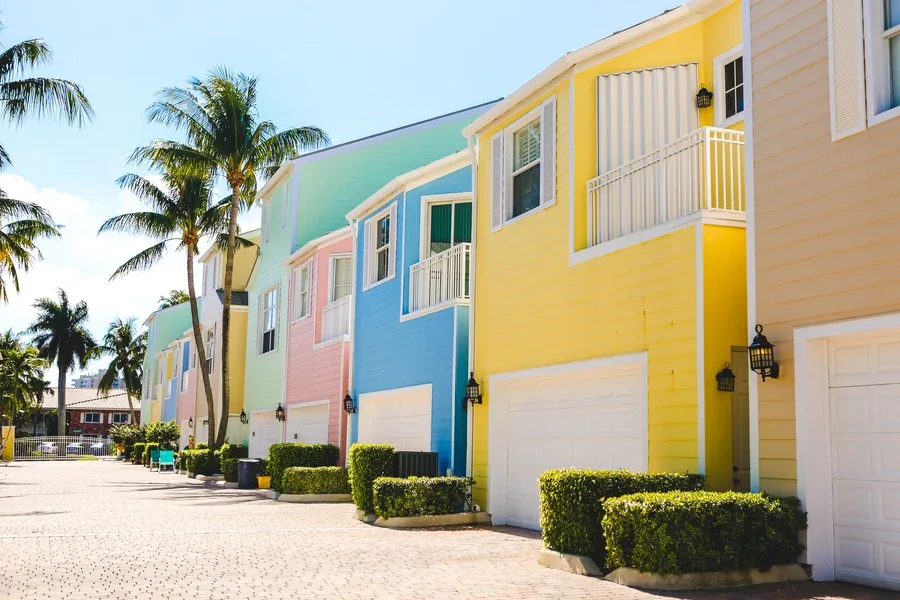
House hacking with an FHA loan is one of the better deals in real estate. You buy a small multi-unit building, live in one unit, rent the others, and put down what an FHA buyer puts down on a single family home. Then you find out about the self-sufficiency test, and the deal you had planned in your head either survives it or it doesn't.
The test only applies to three and four unit properties. Duplexes are exempt. If you're buying a triplex or a fourplex with FHA financing, this is the rule that decides the file.
What the Test Is Asking
FHA wants to know one thing: can the building pay for itself? Not can you pay for it, can the property. So the appraiser estimates market rent for every unit in the building, including the one you're going to live in. FHA then discounts that total by a vacancy and maintenance factor, because no building collects every dollar of rent every month forever. What's left is the number that has to cover the full monthly housing payment: principal, interest, taxes, insurance, mortgage insurance, and any association dues.
If the discounted rent covers the payment, the property is self-sufficient and the loan can move. If it doesn't, FHA won't insure it at that price. The exact discount factor is set by FHA and gets updated from time to time, so ask your loan officer for the current one before you fall in love with a building.
Why Florida Buildings Fail It
The math has three moving parts, and in Florida two of them work against you.
Insurance is the first. Premiums on Florida multi-unit properties can be brutal, and every dollar of premium goes into the payment side of the equation. A building that clears the test in another state can miss it here on insurance alone. Roof age is the lever with the most give. An older roof means a higher premium or no carrier at all, and either one can sink the file.
Taxes are the second. Buy a triplex in a Florida market that's appreciated hard and your assessment resets to what you paid, not what the seller was paying. Investors who budget off the current tax bill get a nasty surprise. Look up what the taxes become after the sale, not what they are today.
Rents are the third, and they're the part buyers try to argue with. Your projections don't matter here. The appraiser's market rent estimate is what FHA uses, and if the units are rented under market to long-term tenants, that estimate can still come in soft. You can't fix that with a spreadsheet.
What to Do If a Building Misses
You have real options, and none of them involve arguing with the appraiser.
Negotiate the price down. A smaller loan means a smaller payment, and the payment side is what the rent has to cover. If the property misses by a little, a price reduction can close the gap, and a seller whose building just failed an FHA appraisal knows the next FHA buyer will hit the same wall.
Put more money down. Same effect, different source. This is why some buyers who planned on minimum down end up bringing more to make a triplex work.
Buy a duplex instead. The test doesn't apply, and the FHA down payment and credit flexibility still do. Plenty of first-time investors start here for exactly this reason. Our Florida house hacking guide walks through how the strategy plays out on smaller buildings.
Or change loan types. Conventional financing on a multi-unit property doesn't run this test at all. It asks for more down and looks harder at your credit and reserves, but the building doesn't have to prove it carries itself. Our post on financing a multi-family home in Florida compares the routes.
Run the test before you write the offer.
Send us the address and the rent roll. We'll estimate the payment with real Florida taxes and insurance and tell you if the building has a shot.
Run It Before the Appraisal, Not After
The expensive version of this story is the one where you go under contract, order the appraisal, wait, and then find out the building missed. You're out the appraisal fee and weeks of your timeline, and if the market moved you may be out the next deal too.
The cheap version takes an afternoon. Get the rent roll or comparable rents for the area, pull the taxes the property will be assessed at after sale, get an insurance quote on the actual building with its actual roof age, and estimate the payment at current pricing. If it clears with room, write the offer. If it's close, negotiate accordingly. If it's nowhere near, you just saved yourself a month.
Also remember the test is not the only FHA hurdle. The property still has to meet FHA's condition standards, and multi-unit buildings tend to have more deferred maintenance than single family homes. Our post on the mistakes that sink FHA applications covers what trips buyers up before the appraiser even shows up.
Why This Rule Exists at All
It's easy to read the self-sufficiency test as FHA getting in your way. It isn't. FHA is insuring a low down payment loan on a small commercial-ish asset owned by someone who's probably never been a landlord. If a tenant leaves and the building can't carry itself, the loan goes bad fast. The test is the guardrail. Occasionally it kills a deal you wanted. More often it kills a deal that would have killed you.
Questions Florida Buyers Ask
What is the FHA self-sufficiency test?
It is FHA's requirement that a three or four unit property generate enough rent to cover its own mortgage payment. The appraiser estimates market rent for every unit, FHA discounts that total by a set vacancy and maintenance factor, and the remainder must cover principal, interest, taxes, insurance, mortgage insurance, and association dues.
Does the FHA self-sufficiency test apply to a duplex?
No. The test applies only to three and four unit properties. A two unit property financed with FHA does not have to prove it carries itself, which is why many first-time house hackers start with a duplex.
What happens if a Florida property fails the self-sufficiency test?
FHA will not insure the loan at that price. You can negotiate the purchase price down, increase your down payment, look at a two unit property instead, or switch to conventional financing, which does not apply the test.
If you're shopping triplexes and fourplexes in Florida, price the payment before you tour the building. It's the fastest way to know which listings are real. Send us an address and we'll run the numbers, or give us a call and see how fast we move once you find one that works.
Individual results may vary. Closing timelines depend on factors including appraisal, title, inspection, and borrower circumstances. 14 Days To Close does not guarantee a specific closing date.