
What Is a Conventional Loan?
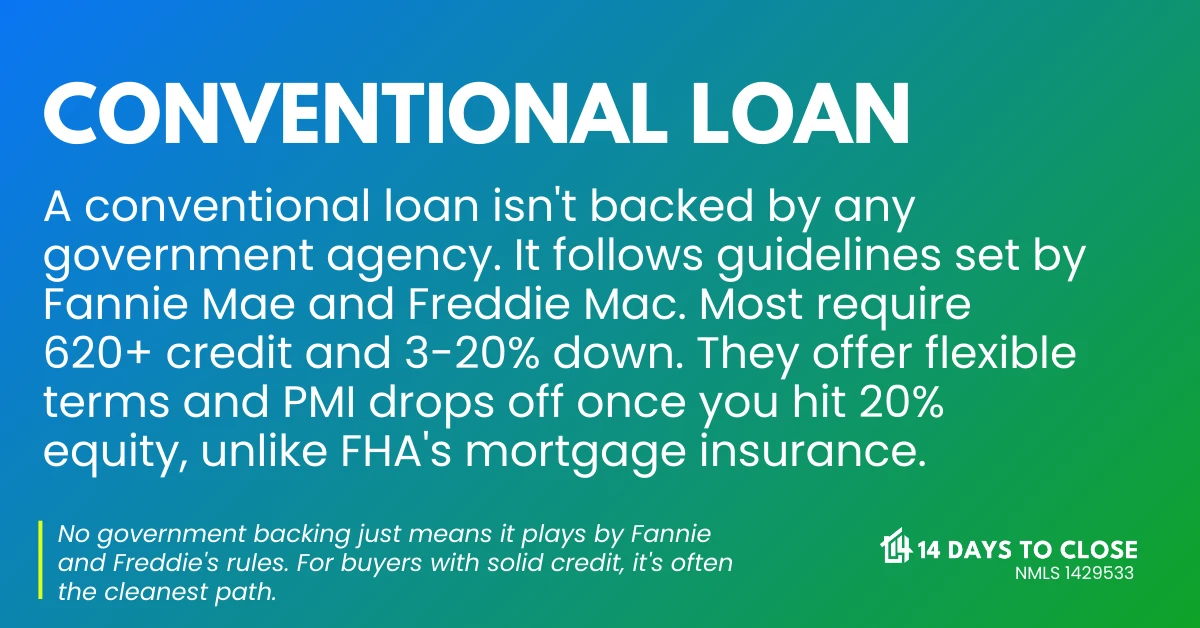
A conventional loan is a type of mortgage that isn't insured by the government. Unlike FHA loans or VA loans, it's offered by private lenders and comes with its own set of rules based on your financial picture. These loans are often called traditional loans, and they're ideal for borrowers with strong credit scores and stable income.
Conventional loans can be used for various property types, including primary residences, second homes, and investment properties. That versatility is a big reason they're appealing to so many buyers. Key features include no government backing, a credit score requirement that's generally higher than government-backed options, and the ability to choose between fixed and adjustable-rate terms.
Conventional Loan Requirements and Guidelines
To qualify for a conventional loan, you'll need to meet specific criteria that lenders use to assess financial health. A strong credit score is essential. Most lenders want to see 620 or higher, and the better your score, the better your rate. Income stability matters just as much. Lenders want steady, reliable income sources because it reduces the risk of default.
Your debt-to-income ratio is another critical factor. Most lenders require a DTI below 43%, which compares your monthly debt payments to your gross income. You'll also need to document employment and have a down payment ready.
Types of Conventional Mortgages
Conventional mortgages come in several forms, and the right one depends on your situation. The most popular choice is the fixed-rate mortgage, which gives you consistent monthly payments and long-term predictability.
Adjustable-rate mortgages offer a lower initial interest rate that can shift with market conditions over time. If you're planning to sell or refinance before the rate adjusts, this can work in your favor. Other conventional mortgage types include interest-only loans, balloon mortgages, Conventional 97 loans (as low as 3% down), and conventional rehab loans.
Down Payment and Private Mortgage Insurance
Conventional loans can require a down payment as low as 3% with programs like the Conventional 97. This lower threshold opens the door for buyers who don't have a large chunk of cash sitting around. That said, a down payment below 20% triggers private mortgage insurance (PMI). PMI protects the lender if you default, and it adds to your monthly payment until you've built enough equity to remove it. For more details on Florida down payment assistance programs, check our full guide.
Find Out If Conventional Fits Your File
Your credit score and DTI determine which loan type saves you the most over the life of the loan. We can run the numbers in minutes.
VA Loan vs Conventional Loan
VA loans and conventional loans serve different borrowers. VA loans are available exclusively to veterans and active-duty service members, and they often come with no down payment requirement and competitive interest rates. Conventional loans are available to a broader pool of buyers but require a minimum down payment and PMI for lower down payment amounts. VA loans also don't require PMI regardless of down payment size. If you qualify for VA benefits, it's worth comparing both options before deciding.
Pros and Cons of Conventional Financing
Conventional financing has real advantages. You get flexible loan terms, the ability to use the loan for investment properties, and competitive rates for qualified borrowers. Once you hit 20% equity, PMI goes away entirely. That's not true for FHA loans, where mortgage insurance often stays for the life of the loan.
The drawbacks are real too. You'll need a higher credit score than FHA requires. A down payment is generally expected, and PMI adds to your costs if you're under 20% down. Stricter income and asset verification is part of the process. If your credit isn't strong yet, it may be worth building it before applying.
The Conventional Loan Approval Process
Getting approved for a conventional loan follows a set sequence. First, you'll go through pre-approval, where you submit financial information and receive a loan estimate. Then comes the home appraisal, where the lender verifies the property's value against the loan amount. Finally, underwriting evaluates your full financial picture and signs off on the loan risk. Being organized with your documents upfront can speed this process significantly.
Common Questions About Conventional Loans
What's the minimum credit score? Most lenders look for 620 or higher, though stronger credit gets you better terms. How much do you need down? Conventional loans can go as low as 3%, but 20% avoids PMI entirely. Can you use a conventional loan for a rental property? Yes, and that's one of the biggest advantages over government-backed programs, which restrict investment property purchases.
If you're trying to figure out whether a conventional loan is the right fit, give us a call or schedule a time to talk. We'll look at your full file and tell you exactly where you stand.