
Refinancing your mortgage isn't just about getting a lower rate. It's a question of home equity. Equity, the difference between your home's value and what you still owe, is your leverage. How much do you actually need to make a refi work? The short answer is: it depends on your loan type. The 20% benchmark is real, but there are paths forward with far less than that.
Loan-to-Value Ratios: The Gatekeeper
Lenders think in loan-to-value ratios, or LTV. That percentage is your loan balance divided by your home's current value. For a standard rate-and-term refinance, most conventional lenders want an LTV of 80% or lower, which means 20% equity. If you're tapping equity for cash, the bar stays roughly the same: most cash-out refinances cap at 80% LTV, leaving 20% equity intact.
Stuck below 20%? FHA Streamline Refinances (for existing FHA borrowers) and VA IRRRLs (for eligible veterans) let you refinance with minimal equity, and in some cases even underwater loans qualify as long as you've kept up with payments.
Refinancing With Low Equity
If your equity is in the single digits, conventional lenders will likely pass. But government-backed loans can bridge the gap. FHA loans allow refinancing with as little as 3.5% equity (96.5% LTV), though you'll pay upfront and annual mortgage insurance premiums alongside that.
Low equity usually comes with tradeoffs: higher rates, tighter credit requirements, or mandatory appraisals. If your home's value has dropped since you bought it, consider talking to a portfolio lender, a local bank or credit union that holds loans on its own books and doesn't have to sell to Fannie or Freddie. They have more flexibility. Before you run numbers based on a rough estimate, get a professional appraisal. Automated valuation tools are a starting point, not a final answer. For a deeper look at the risks of tapping home equity, that's worth reading before you decide.
Cash-Out Refinance: The Equity Sweet Spot
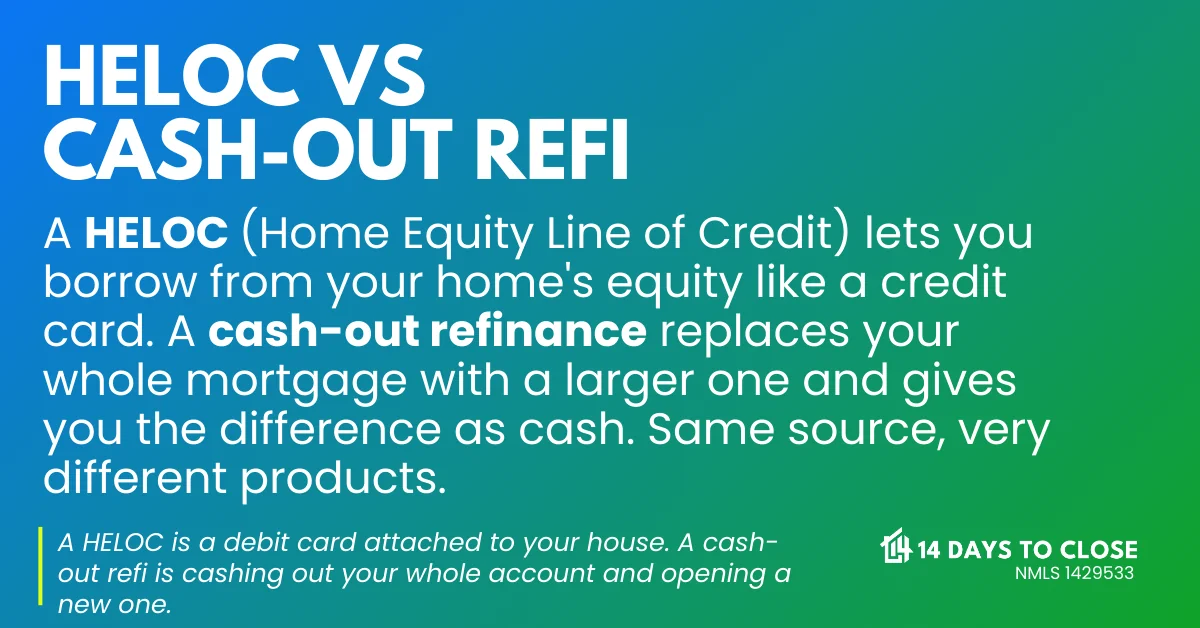
Cash-out refinancing turns your equity into spendable cash: for renovations, debt payoff, or other needs. Most lenders require at least 20% equity remaining after the new loan closes. If your home is worth $400,000, you'd need $80,000 in equity left after the cash-out. Lenders enforce this buffer because cash-out loans carry more risk. You're increasing your balance, and they want coverage if values drop.
FHA cash-out refinances also require you to maintain 20% equity post-close. VA loans are different. Eligible veterans can do a cash-out refinance up to 100% LTV, meaning zero equity required. Some credit unions also offer shared-equity refinances where an investor provides cash in exchange for a share of future appreciation.
Ready to See What Your Equity Can Do?
We'll run your numbers and show you which refinance options make sense for your current equity position, loan type, and goals.
Explore My Refinance OptionsHow to Build Equity Faster
If you're not quite there yet, you can accelerate. Adding even $100 extra per month to your principal can shave years off your loan. Strategic home improvements, kitchens, bathrooms, curb appeal, can boost your appraised value and push your LTV lower. Switching to biweekly mortgage payments is another effective option. You make one extra full payment per year without feeling it.
If rates drop before you've hit 20%, consider a mortgage recast: make a lump-sum principal payment and your lender recalculates your monthly payment based on the lower balance, with no refinance required. Just avoid pulling equity out before you've reached your target LTV, or you'll reset the clock.
Refinancing isn't just possible for homeowners with 20% equity. There are programs built for nearly every equity situation. The right move depends on what you're trying to accomplish and what loan type you're working with. Call us and we'll show you the smartest path forward based on where you actually are.