
Your home is more than just a place to live. It's one of the largest financial assets you'll ever own. Over the years, as you pay down your mortgage and your property value increases, you build equity. That equity is the portion of your home that belongs to you outright, and it can be converted into cash when you need it. Two of the most common ways to do that are through a home equity loan or a reverse mortgage. Both allow you to borrow against your home, but they operate in very different ways and are built for different stages of life. Choosing the wrong one can drain your wealth faster than you'd expect.
How a Home Equity Loan Works
A home equity loan is essentially a second mortgage. You receive one lump sum of cash upfront and repay it over a set term with equal monthly payments, usually at a fixed interest rate. This structure makes it predictable and easy to plan for. It's a strong choice for large, one-time expenses such as major home renovations, consolidating high-interest debt, or covering significant costs like tuition.
Interest rates for home equity loans are generally lower than personal loans or credit cards but higher than first mortgage rates. To qualify, you typically need good credit, steady income, and enough remaining equity in your home after the loan. Since the loan is secured by your property, missed payments could lead to foreclosure. The advantage is control: you know exactly how much you owe each month and when the loan will be paid off.
How a Reverse Mortgage Works
A reverse mortgage is designed for homeowners who are at least 62 years old. Instead of you making payments to the lender, the lender makes payments to you. You can receive the money as a lump sum, in monthly installments, or as a line of credit to draw from when needed.
You don't need to make monthly loan payments as long as you continue living in the home, keep it maintained, and stay current on property taxes and homeowner's insurance. The loan is repaid when you sell the home, move out permanently, or pass away. The most common version is the Home Equity Conversion Mortgage (HECM), which is insured by the Federal Housing Administration. This program includes mandatory counseling before closing and specific fees and mortgage insurance premiums.
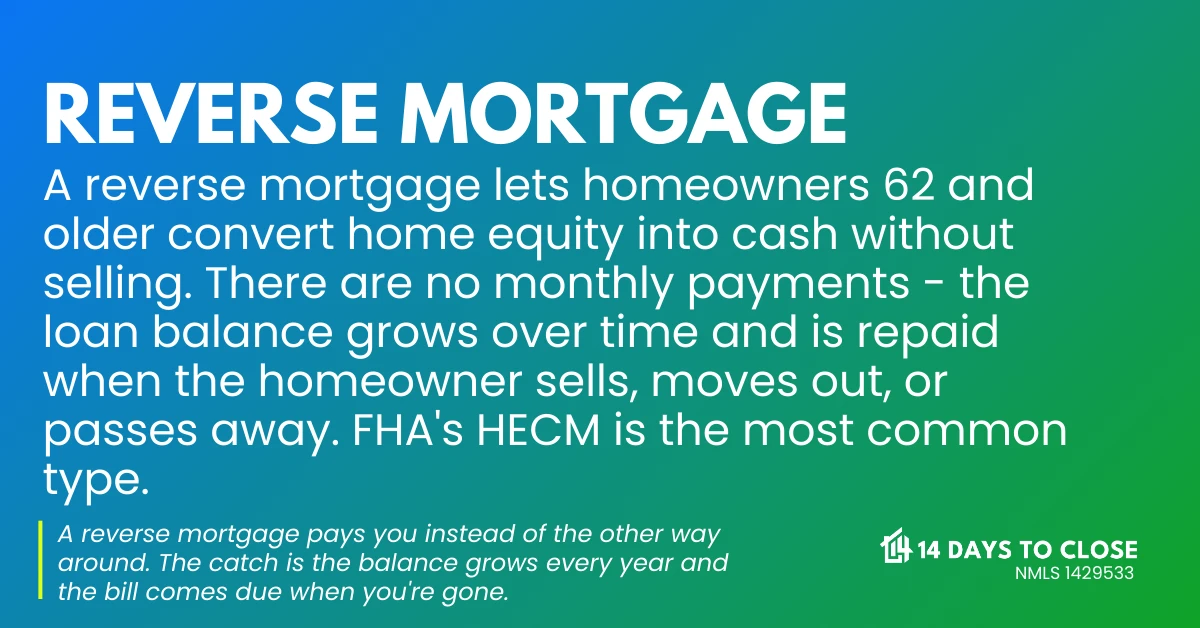
The main trade-off: the loan balance grows over time, which reduces the equity available to you or your heirs in the future. The debt increases each month as interest accrues. That works well if your priority is cash flow now, but it's a meaningful consideration if preserving equity for the future matters to you.
Thinking about tapping your equity?
A cash-out refinance might be a third option worth looking at. We'll compare all your choices side by side so you can decide with clear numbers.
Talk to a Loan ExpertKey Differences That Shape the Decision
Eligibility is one of the most important distinctions. A home equity loan is available to homeowners of any age with strong credit, enough equity, and steady income. A reverse mortgage is limited to those 62 or older with substantial equity or who own their home outright.
Repayment is another major factor. A home equity loan requires immediate monthly payments. A reverse mortgage doesn't require repayment until you move, sell, or pass away. That difference can help with short-term cash flow, but it reduces your ownership stake over time. With a home equity loan, you're reducing your debt from day one. For more on how refinancing compares, see our breakdown of cash-out refinance vs. HELOC, which covers a third option that often gets overlooked.
Making the Right Choice for Your Situation
A home equity loan tends to be the stronger fit if you have a specific expense in mind, want predictable payments, and have the income to handle an additional monthly bill. It also makes more sense if protecting the equity you've built is a priority.
A reverse mortgage is worth considering if you're retired or near retirement, want to stay in your home long term, and prefer to avoid adding another monthly payment. It can free up cash for living expenses, medical costs, or other needs without forcing a sale. If you're researching FHA refinance options, those rules are separate from HECM and worth reviewing on their own.
Your home is one of your most valuable financial tools. Deciding how to use its equity should be based on a clear understanding of the short-term benefits and the long-term costs. Call us and we'll walk through both options with real numbers for your situation.