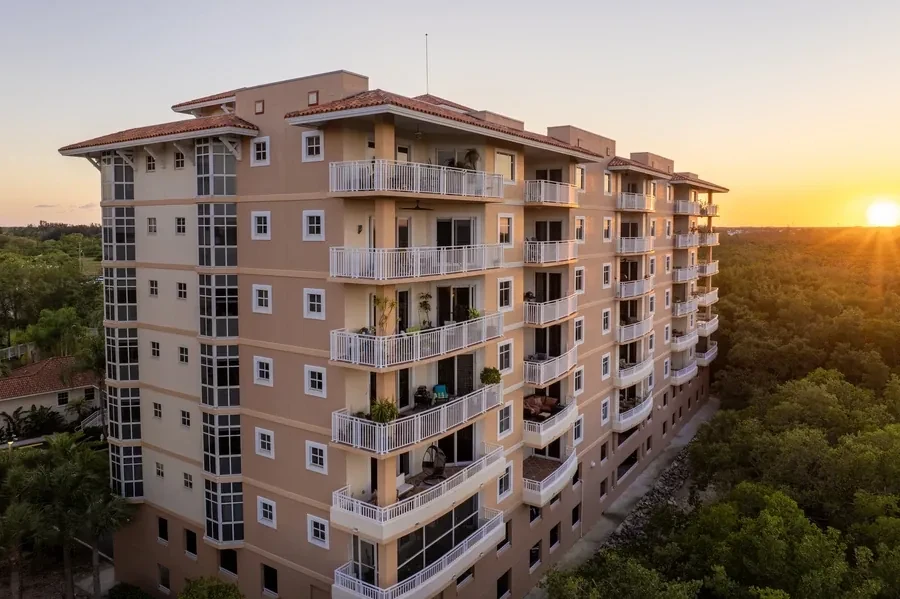
You found the condo. Your credit's fine, your down payment's ready, your FHA pre-approval is in hand. Then the lender pulls up the building and tells you it isn't FHA approved, and the deal is over before it started. On an FHA condo purchase the building has to qualify alongside you, and in Florida that second approval fails more often than buyers expect.
Why the Building Needs Its Own Approval
When you buy a condo, you're buying into a shared financial structure. Your unit's value depends on whether the association collects its dues, funds its reserves, insures the property properly, and stays out of court. HUD underwrites that structure the same way it underwrites you, because a healthy borrower in an unhealthy building is still a risk to the loan. So FHA maintains a list of approved projects, and if your building isn't on it, standard FHA financing isn't available for that unit. Our guide to condo financing in Florida covers the wider picture.
How to Check a Building Before You Fall in Love
HUD publishes a searchable list of approved condominium projects, and it's public. Search by name, by county, or by state, and the result tells you if the project is approved and when that approval expires. Approvals lapse, which trips up more deals than outright denials do: a building that closed FHA loans two years ago may have let its status expire since. Check the status yourself before you write an offer, and check it again if there's a long gap between contract and closing. The listing agent's word that "we've done FHA here before" is not a status check.
What HUD Looks At
The review is about the association's health, not the individual unit. HUD wants a minimum share of units occupied by owners rather than renters, a cap on how much of the building any single investor can own, dues delinquency kept under a limit, adequate reserves funded for repairs, insurance that covers the property and the association's liability, and no litigation that threatens the project's finances. Commercial space in a mixed-use building is capped too. Miss any of those and the project either gets denied or never applies in the first place, which is the more common outcome. Applying takes effort and money, and plenty of boards simply never bother.
The Single-Unit Route
There's a second path. FHA allows single-unit approval, which reviews one specific unit in an unapproved building instead of the whole project. The building still has to clear a shorter list of conditions, and only a limited share of units in any one building can be financed this way, so it's not a workaround for a troubled association. It's a real option for a sound building whose board never filed the paperwork. Ask your loan officer to run it before you give up on the unit, because plenty of Florida buyers walk away from a perfectly financeable condo without knowing this exists.
Not sure if your building qualifies?
Send us the address. We'll check the project status, look at whether single-unit approval fits, and tell you what your options are before you write an offer.
Why Florida Buildings Get Tripped Up
Florida has more condos than almost anywhere, and a lot of them are old, coastal, and investor-heavy. Each of those cuts against approval. Buildings near the water carry insurance costs that strain budgets. Older buildings face structural inspection and reserve funding requirements that have forced dues up and triggered special assessments, and an association draining reserves to fund a repair looks weak on a HUD review. Seasonal and rental-heavy buildings can blow past the owner-occupancy threshold. And litigation, common enough in Florida condo life, can stop a project cold. None of this makes a building bad. It makes the paperwork harder, and it's why the approved list here is shorter than the condo inventory would suggest.
What to Do When the Building Isn't Approved
You have options and they're worth working through in order. Ask whether single-unit approval fits. Ask the board if they'd pursue project approval, since it benefits every owner trying to sell later, though it takes time you may not have. Look at conventional financing, which has its own condo review with different thresholds and often clears buildings FHA won't. A larger down payment can open doors on a conventional file that an FHA file can't use. And if the building's problems are financial rather than procedural, take that as information about the investment, not just the loan. Our FHA versus conventional comparison lays out the trade-offs, and the 2026 FHA loan limits by Florida county tell you what you can borrow once the building clears.
Give the Approval Check a Head Start
Run the project status before you write the offer, not after inspection. Build a financing contingency that gives you room if the status turns out to be stale. Ask for the association's budget, reserve study, and any pending assessment or litigation disclosures early, because those documents predict the HUD outcome better than anything else you'll see. And work with a lender who checks the building on day one instead of the week before closing. When the file and the building are both clean, this moves quickly. See how fast we move.
Questions Florida Condo Buyers Ask
How do I find out if a condo is FHA approved?
HUD publishes a public search tool for approved condominium projects. Look the building up by name or county and check both the approval status and the expiration date, since lapsed approvals are common.
Can I get an FHA loan in a building that isn't approved?
Possibly, through single-unit approval, which reviews one unit instead of the whole project. The building still has to meet a shorter set of conditions, and only a limited share of units in a building can be financed this way.
Why do so many Florida condos fail FHA approval?
Investor and rental concentration, dues delinquency, insurance costs, underfunded reserves, and litigation are the usual reasons. Older coastal buildings dealing with structural inspection and reserve requirements are the hardest cases.
The building is half the loan on an FHA condo purchase, and it's the half most buyers never check until it's too late. Send us the address before you write the offer and we'll tell you where it stands. Give us a call or see how fast we move once the project clears.
Individual results may vary. Closing timelines depend on factors including appraisal, title, inspection, and borrower circumstances. 14 Days To Close does not guarantee a specific closing date.