3%Minimum Down Payment
620+Credit Score Accepted
1,400+Five-Star Google Reviews
24/7Client Support

Pick Your Starting Point

Same destination, a real pre-approval letter that lets you make competitive offers. Three ways to get there.

Most Direct

Apply Online

The full conventional application takes 10-15 minutes. Most files get a same-day decision, and conventional tends to move fastest in underwriting.

What you'll need
  • Most recent W-2s (or 2 years of tax returns if self-employed)
  • Last 30 days of pay stubs
  • Last 2 months of bank statements
  • Government-issued ID
Start My Conventional Application

Secure portal hosted by PRMG. Opens in a new tab.

Most Popular

Schedule a Call

Pick a 30-minute slot that works for you. We'll compare conventional against FHA and VA if they apply, and tell you which loan type puts the lowest monthly payment in front of you.

  • No application required
  • Evening and weekend slots available
  • Side-by-side comparison of conventional vs. FHA
Schedule a Call

30 minutes, no commitment.

Fastest Answer

Call Now

Talk to a licensed loan officer right now. We'll run your scenario and tell you where you stand, whether conventional is the right call or not.

  • Real loan officer, not a call center
  • 5-minute eligibility check
  • Available 7 days a week
Call Now

Average wait under 60 seconds.

About Conventional Loans

Conventional loans aren't backed by a government agency. They're backed by private investors through Fannie Mae and Freddie Mac, and they're the most common mortgage in the U.S. Minimum down payment can be as low as 3% for first-time buyers (Fannie's HomeReady, Freddie's Home Possible) or 5% on a standard conventional loan. Unlike FHA, private mortgage insurance drops off automatically once you reach 78% loan-to-value, and can often be removed sooner on request at 80%.

Am I Eligible for a Conventional Loan?

Conventional is the most flexible loan type on the market, which also means it has the most dials to turn. Here's the core eligibility checklist. If most of these fit, we can usually structure a conventional file around your situation.

Credit score 620 or higher. Better rates at 680, 720, and 740. The jump from 660 to 680 is often the biggest single rate-saver on conventional.
Two years of employment history or documented self-employment with tax returns. Gaps can be explained.
Debt-to-income ratio up to 45% with room up to 50% when the rest of the file is strong. Fannie and Freddie both run automated underwriting that sets the exact cap.
Loan amount within the 2026 conforming limit ($806,500 in most Florida counties; higher in Monroe County). Above that, we'd look at jumbo.
Primary residence, second home, or investment. Conventional is the only agency loan that finances second homes and investment properties, which matters for Florida buyers.
Down payment 3% to 20% or more. First-time buyer programs allow 3%. Standard conventional starts at 5%. Hitting 20% avoids PMI entirely.
Two-year waiting period after Chapter 7 bankruptcy with re-established credit, four years standard, seven years after foreclosure unless extenuating.
Gift funds allowed for down payment and closing costs from family, with a proper gift letter and sourced funds from the donor.

What You'll Need to Apply

Have these handy before you start the online application or jump on a call. Anything you don't have, we can request directly from your employer or bank during processing.

Photo ID

A current driver's license, state ID, or passport for every borrower on the loan.

Two Years of Income Docs

W-2s if you're salaried, 1099s and federal tax returns if you're self-employed or commission-based. Bonus and overtime need two years of history to count.

Last 30 Days of Pay Stubs

Most recent pay stubs covering a full month. These confirm current income and year-to-date totals.

Two Months of Bank Statements

All accounts for down payment, closing costs, and reserves. Fannie and Freddie both check for sourced funds, so flag any big deposits.

Debt Snapshot

Monthly minimums on auto loans, student loans, credit cards, and installment debt. Conventional pricing is more sensitive to DTI than FHA, so accuracy matters.

Gift Letter (If Using Gift Funds)

If family is helping with the down payment, we'll provide a gift letter template. The donor will need to show the source of the funds too.

What Happens After You Apply

No black box. Here's the actual sequence after your application lands with our team, whether you came in online or scheduled a call.

1

Within minutes

We pull credit, run Desktop Underwriter (Fannie) or Loan Product Advisor (Freddie), and confirm income and asset numbers. You'll get a text or email with either a clean approval or the short list of what's missing.

2

Same day, in most cases

If the file is clean, we issue a real pre-approval letter you can send to your agent and use on offers. If we need to dig in (self-employed income, recent credit events, multi-source income), we set up a call within 24 hours.

3

Days 1 to 14 (after you go under contract)

Submission to underwriting, appraisal, conditional approval, clear to close. Conventional is typically the fastest loan type to close because there's no government-agency review step after lender underwriting.

Why Conventional Works in Florida

Florida's conforming loan limit in 2026 is $806,500 in most counties, which covers the majority of the state's single-family purchases. In high-cost areas like Monroe County (the Keys), the limit rises to over $1 million. That means conventional is the default financing option for most Florida buyers who aren't constrained to FHA, VA, or USDA.

PMI on conventional loans drops off automatically at 78% loan-to-value (22% equity), and can be requested to be removed earlier at 80% with a current appraisal. Compared to FHA, where MIP stays for the life of the loan unless you put 10% down, conventional has a real path to eliminating mortgage insurance without refinancing. For buyers planning to stay in the home 5+ years, the math often favors conventional even at the same down payment.

Conventional is also the only agency loan that finances second homes and investment property. That matters in Florida because a lot of buyers are purchasing vacation homes in Naples, Sarasota, the Keys, or the Panhandle, or adding a rental property to their portfolio. With an FHA or VA loan, that's not an option, with conventional, it is.

Pre-Application FAQs

How much down payment do I need for a conventional loan?

Conventional loans allow as little as 3% down for first-time buyers (HomeReady or Home Possible programs) and 5% down on a standard conventional loan. Hitting 20% down removes PMI entirely from day one, which some buyers prefer.

When does PMI drop off a conventional loan?

PMI automatically cancels at 78% loan-to-value based on the original purchase price (so once you've paid down 22% of the original balance). You can also request removal at 80% LTV, which typically requires a current appraisal to verify the value. On a rising Florida market, that can happen years before amortization alone would get you there.

Is conventional better than FHA?

It depends. For buyers with strong credit (720+) and 10%+ down, conventional almost always wins on monthly payment because of lower PMI rates and the ability to drop PMI at 20% equity. For buyers with credit in the 620-680 range or less than 5% down, FHA often wins. We run the side-by-side before you commit.

What's the minimum credit score for a conventional loan?

The hard minimum is 620. Pricing improves at 680, 700, 720, and 740. If your score is in the 620-660 range, FHA or a first-time buyer conventional product may price better. Schedule a call and we'll compare both options on your actual numbers.

Can I use a conventional loan to buy a second home in Florida?

Yes. Conventional is the primary financing path for second homes. You'll need at least 10% down (some lenders require 15-20%) and two months of additional reserves. Rates are generally slightly higher than on a primary residence, typically by 0.25% to 0.5%.

What's the conventional loan limit in Florida for 2026?

The conforming loan limit in most Florida counties is $806,500. Monroe County (the Keys) is higher, at around $1 million. Above the conforming limit, you'd move to a jumbo loan. We'll confirm your county's limit on the call.

Can I use gift funds for a conventional down payment?

Yes. For primary residence conventional loans, 100% of the down payment can come from a gift if you're putting down less than 20%. Above 20% down, the rules are even looser. The donor must be a family member or approved source, and the gift must be properly documented and sourced.

Do I need two years of tax returns for conventional?

For salaried W-2 income, usually no, W-2s and pay stubs are sufficient. For self-employed, commission, bonus, or rental income, we need two years of tax returns. If your self-employment is newer than two years, there are still paths, but they're more nuanced.

Will the seller pay closing costs on a conventional loan?

Yes, up to a limit. For a primary residence with less than 10% down, sellers can contribute up to 3% of the sale price. From 10% to 25% down, up to 6%. Above 25%, up to 9%. Investment properties cap at 2%.

How fast does conventional close?

Conventional is usually the fastest loan type to close because there's no government-agency review step after lender underwriting. Our target is 14 days from contract signed to funds at closing, assuming clean cooperation from the title company and appraiser.

Can I buy an investment property with a conventional loan?

Yes. Conventional is the most common financing for investment property. You'll typically need 15-25% down and stronger reserves. If you don't want to qualify on personal income, DSCR may be a better fit. We'll run both and tell you which is cheaper on a total-cost basis.
Ready When You Are

Three ways to start. Pick what feels right.

Related Reading

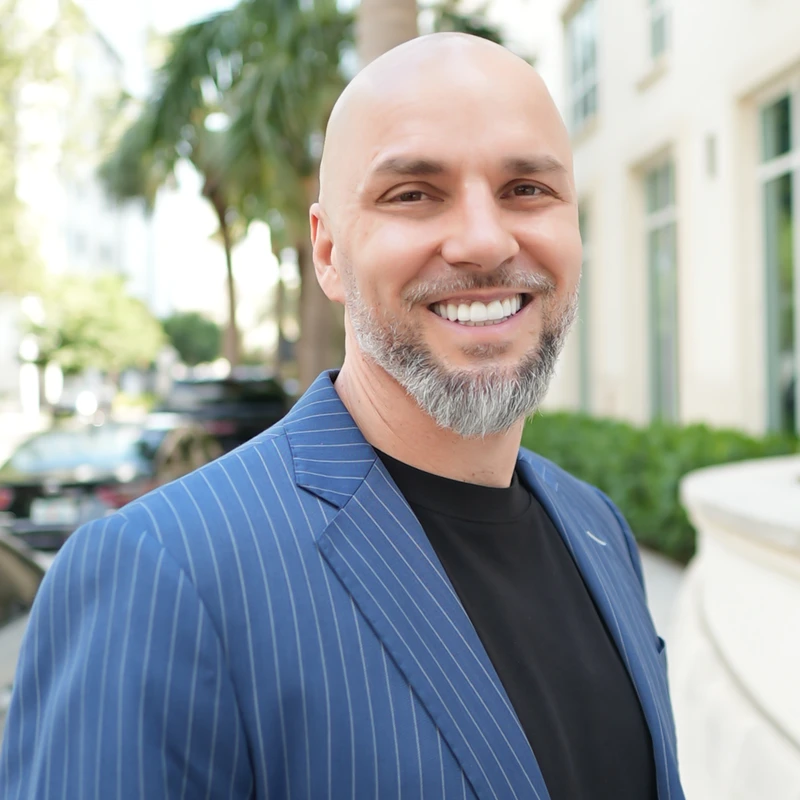
Jordan Vreeland, Licensed Mortgage Broker